

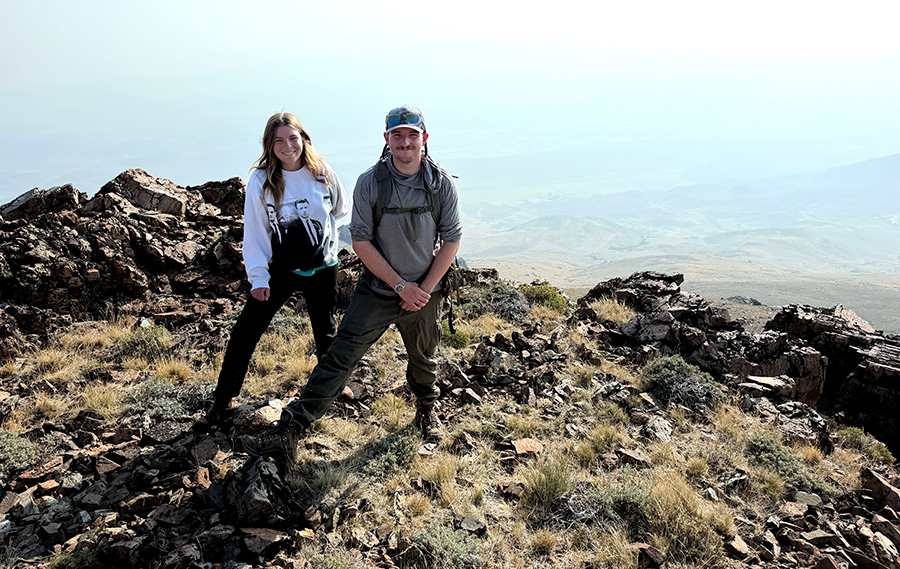
Tucked between the Pueblo and Trout Creek Mountains and nestled within the vast expanse of the Great Basin, the Pueblo Valley carries a rhythm all its own in summer. As cattle graze the uplands, birds nest in the wet meadows, and conservation projects move into full swing, Trout Creek Ranch becomes a bustling hub of stewardship. For the second year of our summer internship program, we were thrilled to welcome two more dedicated interns to live and work at ranch headquarters.
Seeking hands-on support across nearly 17,000 acres of interconnected landscape, Oregon Desert Land Trust (ODLT) designed the Trout Creek Ranch paid internship as an immersive experience at the intersection of working and wild lands conservation. For nearly three months, our interns played a vital role in supporting conservation plans through land health monitoring and facilities management, and represented ODLT while hosting guests, partners, neighbors and fellow community members.
“Every year I look forward to hosting new interns,” said ODLT Stewardship Program Coordinator Brooke Gray. “During interviews, I am searching for passionate souls, hungry for adventure, because just existing at Trout Creek is an adventure!”
This work is made possible by generous supporters committed to cultivating future conservation leaders and strengthening rural community ties. From a strong pool of candidates, our 2026 cohort stood out with their technical expertise, fieldwork experience, and a shared enthusiasm for remote landscapes.
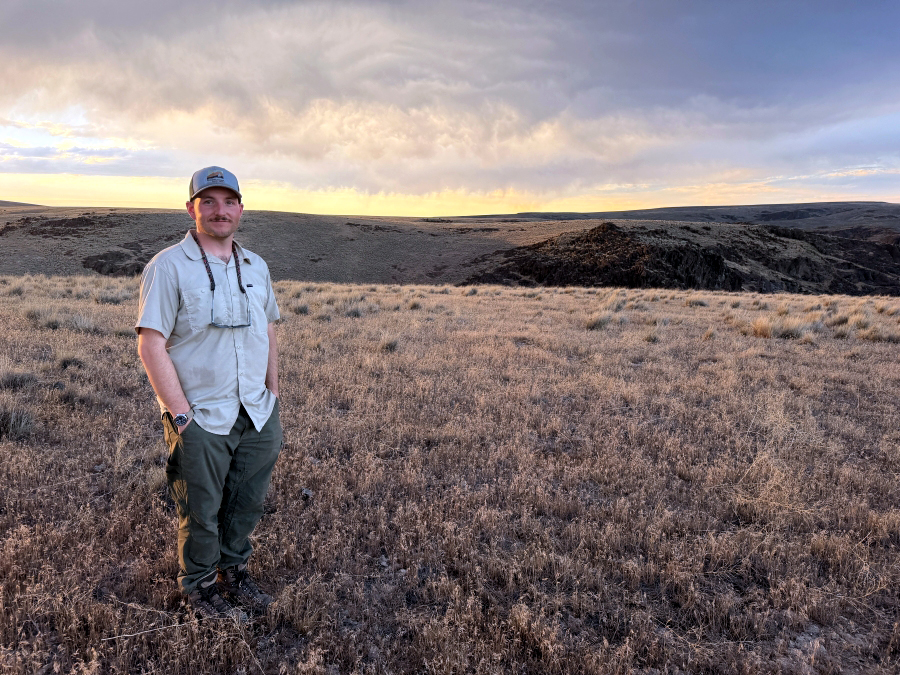
For Cayden Whipkey, coming back to the desert felt like coming home. He grew up near Nampa, Idaho and was focusing on botany at Oregon State University. With a background in geographic information systems (GIS) and field survey techniques, he was drawn directly to ODLT’s collaborative mission.
“This was one of the first times I applied to a job when I was actually excited about the organization itself,” Whipkey shared. “The main thing was the grazing and the social aspects mixing with it, like keeping good relations with landowners. That’s the way things are gonna get done. It was cool to see a group that’s actually able to do a lot. That’s what drew me to it.”
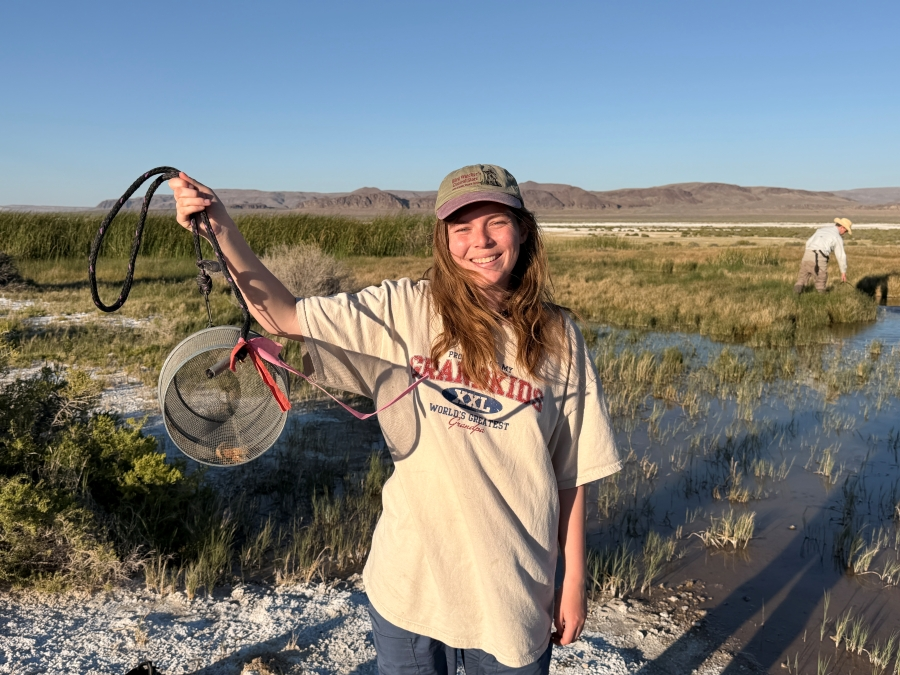
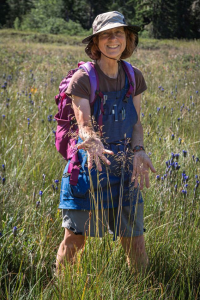
Olivia (Via) Ruiz joined the team from the University of California, Berkeley, where she studied geography. Ruiz brought impressive field experience, having previously worked alongside the Kootzaduka Tribe at Mono Lake and the Ahtna Athabascan people in McCarthy, Alaska. She had the opportunity to return to Alaska, but Oregon’s Great Basin was calling.
“I thought that the work I’d be doing here would be impactful, which it was. This organization does a lot of great work, and I wanted to be a part of that. On a more personal, selfish note, I’d never been to Oregon and thought it would be fun to explore a new place, which I got to do, and that was really awesome.”
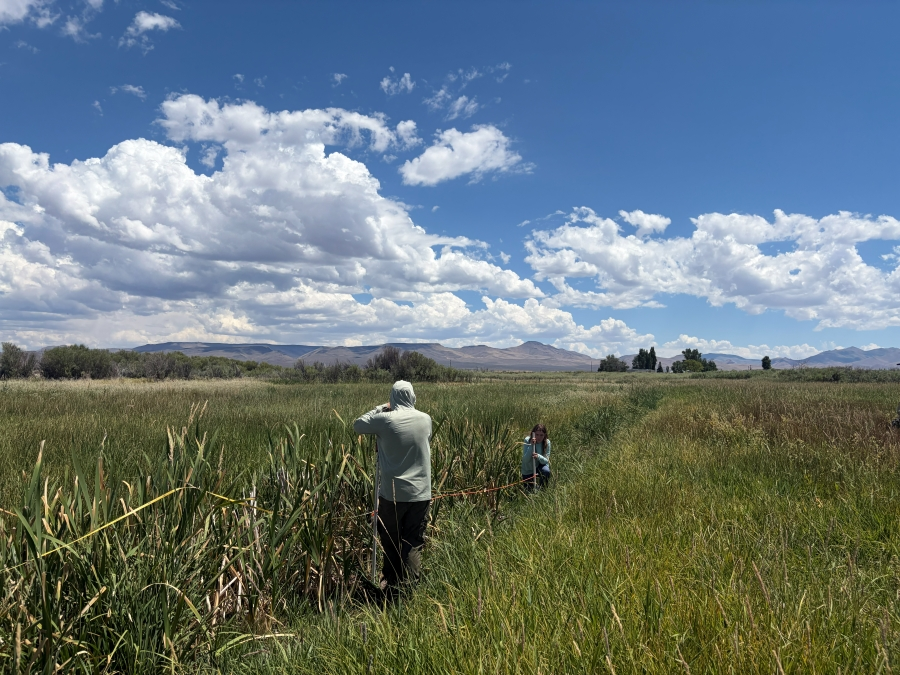
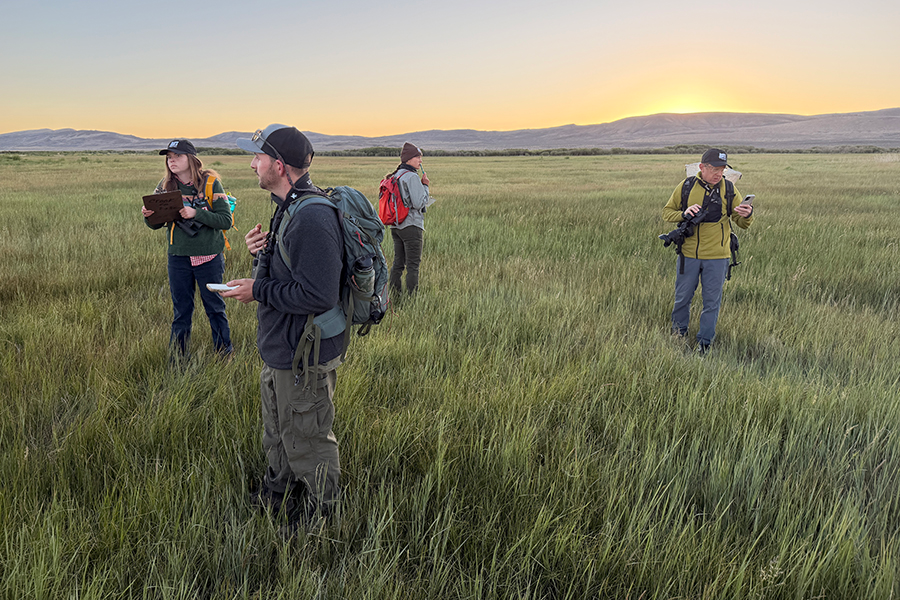
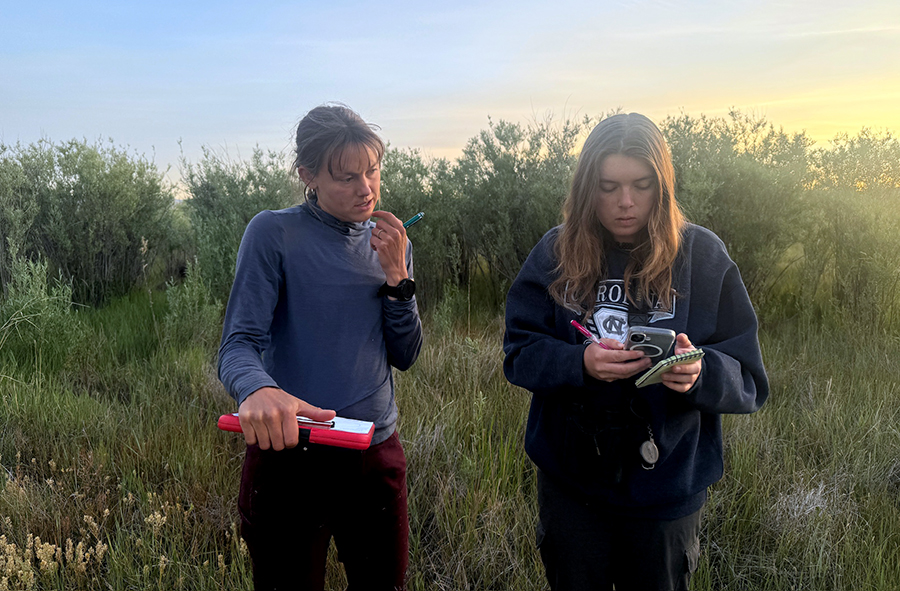
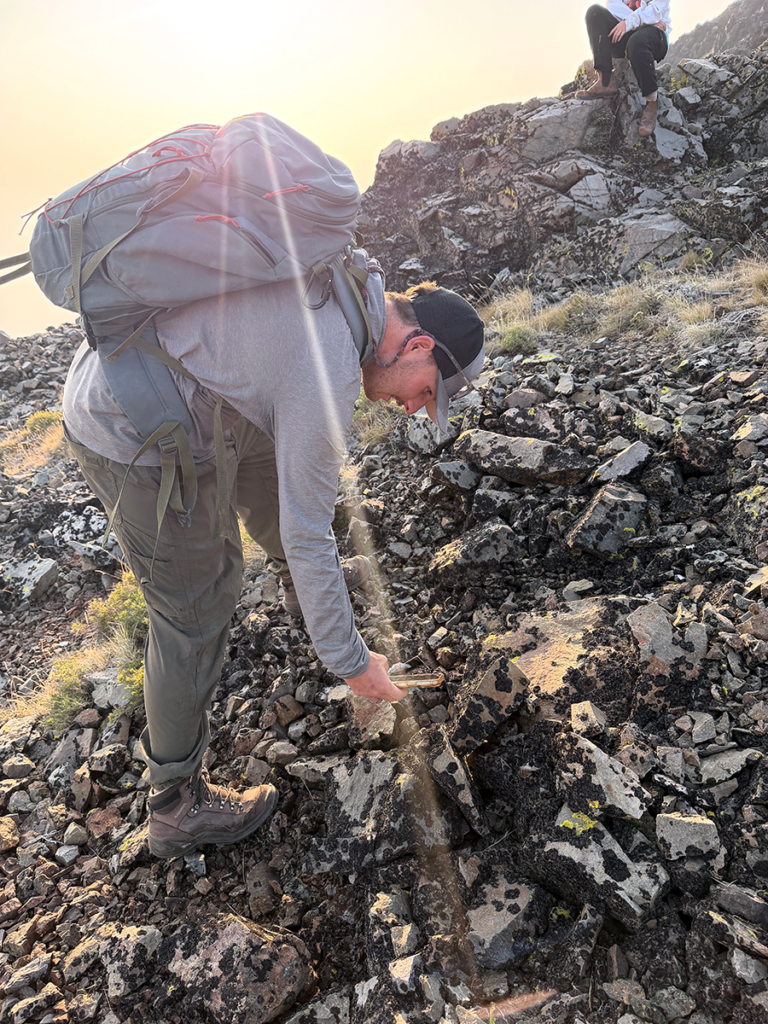
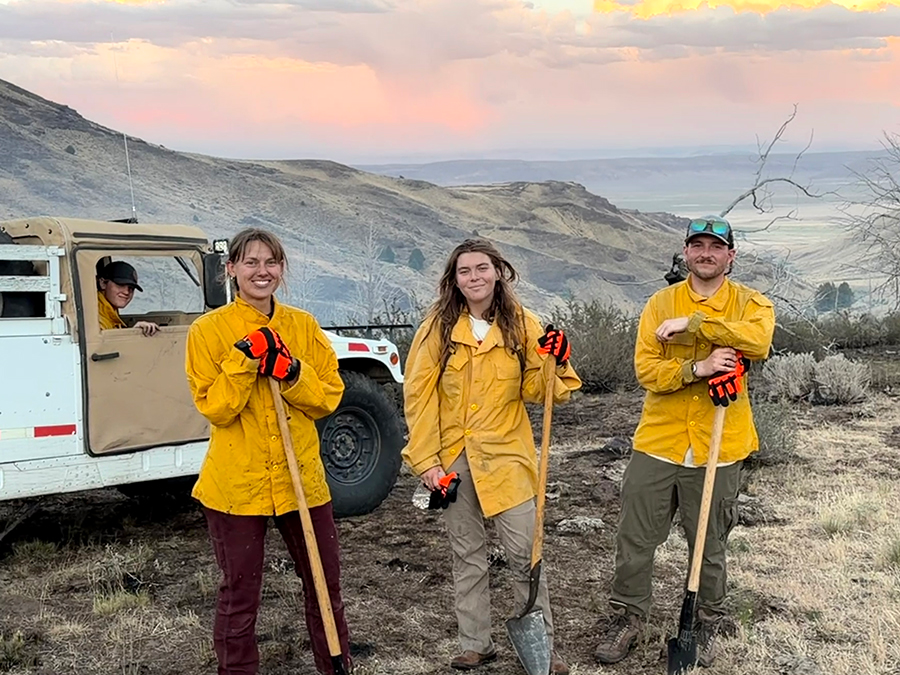
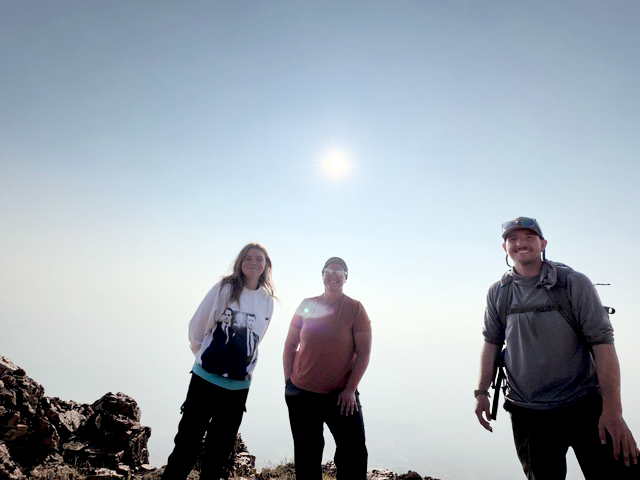
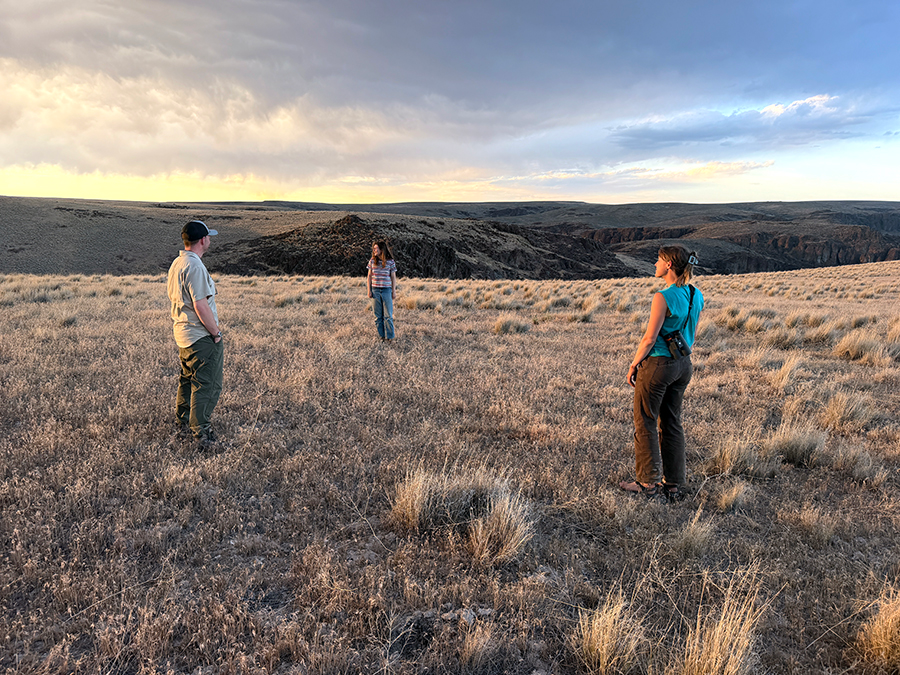
For 11 weeks, no two days were identical at Trout Creek Ranch. From sunrise bird counts and plant surveys to hands-on facility maintenance, Whipkey and Ruiz immersed themselves across all facets of property management and conservation planning. ODLT staff was particularly impressed by their ability to seamlessly shift from unexpected long hours on a fire line one day, then back to weeding the next.
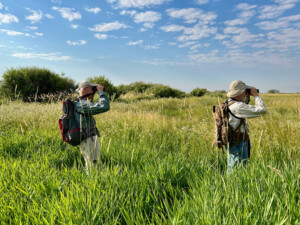
They also worked closely with Darian Rubow, a University of Vermont graduate student researching wetland birds at the ranch. Through consistent surveys, the team gathered data on how local birds rely on meadow vegetation and water conditions. This seasonal fieldwork provides valuable insights to support future restoration planning, along with meaningful memories.
“The big one for me is working with Darian … waking up with her at four in the morning to go and do bird surveys, and seeing the sun rise in the meadows … having that experience and really being attached to a place and wanting to see it do well.” Ruiz recalled.
For Whipkey, his absolute favorite thing was being so immersed in the landscape.
He also didn’t have much experience with land trusts or nonprofits in general, and appreciated learning about funding opportunities and how projects get started.
“That’s not really a book you read. You have to learn that in person,” he said.
Beyond ecological monitoring and mountainous field trips, both interns were involved in ranch infrastructure and property operations, including at our newest property, Disaster Peak Ranch. Whipkey also enjoyed assisting in construction projects and appreciated the direct, tangible progress of facility caretaking. When regional wildfires arose, Ruiz observed local emergency coordination firsthand, witnessing the strength of rural community resilience.
“The Rangeland Fire Protection Association (RFPA) model is really amazing; it’s having a community of people who care about the land and place they’re fighting fire in,” Ruiz observed. She saw it as another example of how vital relationships are between agencies, organizations and neighbors. “Everything is so interconnected. It was something that I kind of understood, but really got the full picture of this summer.”
A central element of the internship program is understanding how land conservation functions within a vibrant ranching community. Both interns noted the welcoming atmosphere of the valley and how ODLT staff aren’t just staff; they’re part of the community.
“It takes a special kind of person to really live in Fields Basin and appreciate it,” said Gray. “It’s so remote, and you have no idea what to expect until you arrive. Cayden and Via jumped right in and embraced every aspect of life there. Now they are forever a piece of the Trout Creek family and we miss having them.”
As their summer came to a close, both interns noted how the experience shifted their personal and professional outlooks. For Whipkey, a new path was laid.
“I’ve had one career goal for five and a half years, and now, I have a new goal. I’m kinda feeling land stewardship; what’s best for the land.”
For Ruiz, the internship pushed her outside her comfort zone in the best possible way and helped her envision her dream job.
“It exposed me to so many different tools and skills and showed what land management in practice looks like.”
Though Cayden Whipkey and Via Ruiz may take separate paths, all they accomplished together is part of ODLT’s ongoing efforts across the high desert; beyond their work, a true measure of their experience shows in an everlasting reverence for the land and all who inhabit it.
“It feels like somewhere where, as a human, you’re just visiting,” reflected Whipkey. “You get the sense it’s not just yours when you’re there. It’s everyone’s.”
Published September, 2026
Learn More
- Read about how neighbors help neighbors fight fires in Fields with the Rangeland Fire Protection Associations.
- Learn more about Disaster Peak Ranch.
- Take part in volunteer projects of bird surveys, land inspections and work parties, which can include fence removal or updates with wildlife friendly strands.
- Learn about our first paid internship and our first summer internship.
STAY TUNED!
In 2027 we’ll share the findings of Darian Rubow’s study in the wet meadows.
- Read about the 2023 research of graduate students Dylan O’Leary and Hayley Kolding that helps our conservation planning and management.
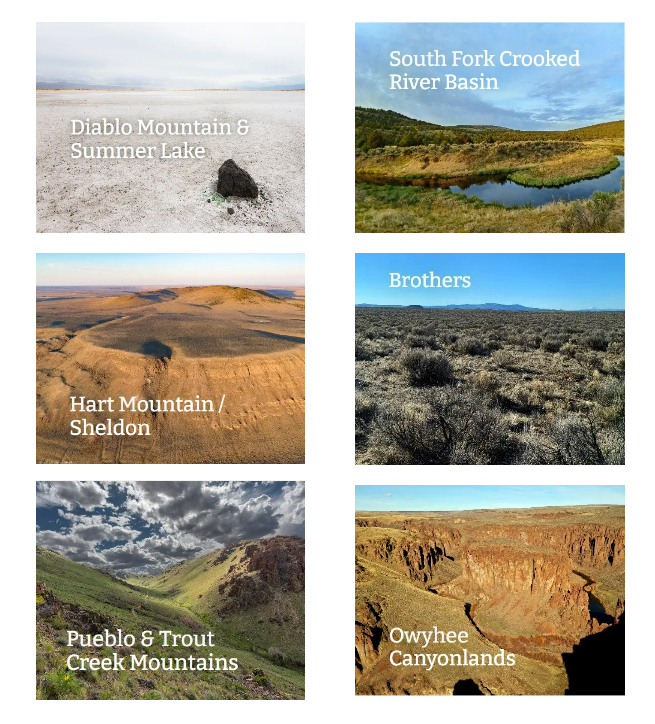
Discover details of where we work
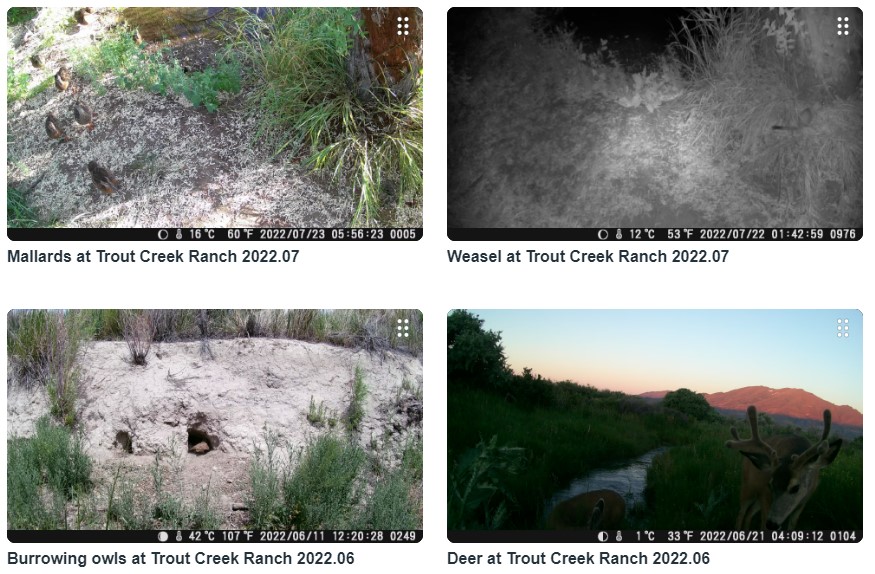
View Wildlife Camera Videos
More perspectives
Related Reads
Happy Recognitions
A conversation with Cindy Talbott Roché — Botanist, Illustrator and Author — Bend, OR
Listening to the Landscape
We've made way for restoration at Trout Creek Ranch.
Desert Duet
A conversation with SageCon Coordinator Rachael Davee & Oregon Department of Fish & Wildlife Biologist Andrew Walch — Redmond, OR
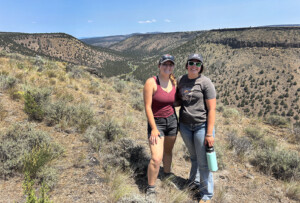
A Summer to Remember
College interns were a huge help over the summer.
A Range of Change
Trout Creek Ranch updates help conservation and community.
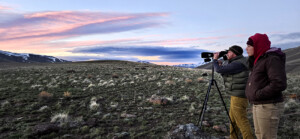
Grouse Count
We've joined in state surveys of greater sage-grouse.
Reaching for new heights in conservation
Together, we can conserve Disaster Peak Ranch!
Going with the flow
We're restoring a creek to help fish and wildlife.
A land of learning
Local Tribal members shared stewardship practices to inspire youth.
Looking out for the birds
Volunteers help guide restoration plans with wetland bird surveys.
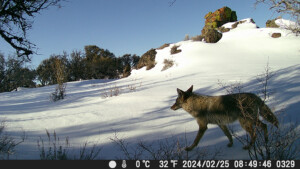
Watching wildlife
Wildlife cameras help with conservation plans for animals throughout the year.
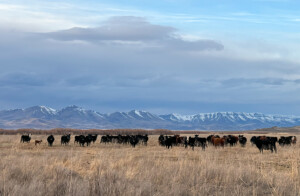
Virtual fences mooove cows online
Virtual fence is a new technology that can help land managers maintain wildlife connectivity in permitted grazing areas.
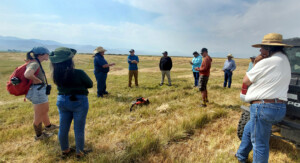
Tribal Gatherings
Tribal leaders discussed the Native history and stewardship of their homelands at Trout Creek Ranch.
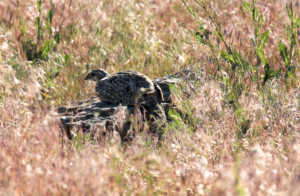
Research fueled by fire
Oregon State University finished 10 years of fieldwork on sage-grouse responses to wildfire.
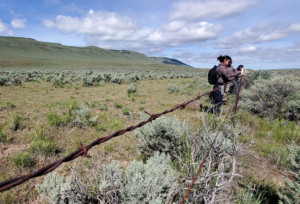
Tribal Stewards
Tribal teens lead on conservation efforts through Northwest Youth Corps.
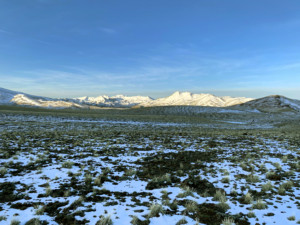
Spring returns
Rod Klus returns to researching sage-grouse for Oregon Department of Fish and Wildlife.
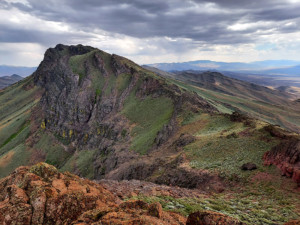
Mountains of Research
Researchers spent a summer in the mountains and left with more than data.
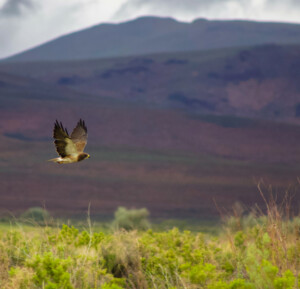
Spreading wings in conservation
Jack Strang created new connections to the high desert during our first internship.
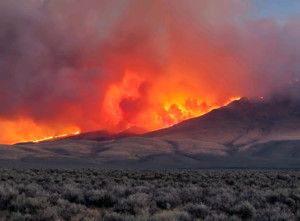
Neighbors helping neighbors fight fires
Rangeland Fire Protection Associations protect the high desert and each other.
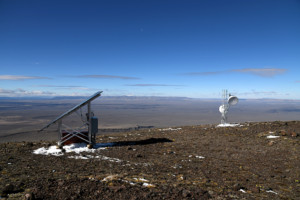
Watching for wildfires
A live camera on Beatys Butte helps wildfire efforts in the high desert.
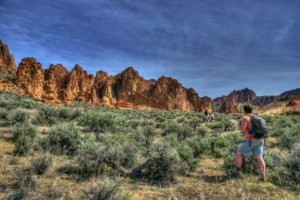
Spring into recreation & conservation
John Sterling works at the intersection of both as a volunteer board member.
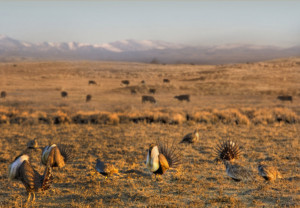
Balancing a range of concerns
Angela Sitz brings wild and working lands together.
Wildlife encounters
Land Trust volunteers are keeping track of animals on the ground and on camera.
Keeping it connected
Closing the unnatural gap between wildlife refuges opens doors for pronghorn.
Seeing the land in a different Light
Northern Paiute Tribal member Wilson Wewa brings a Native perspective to ODLT's work.
