

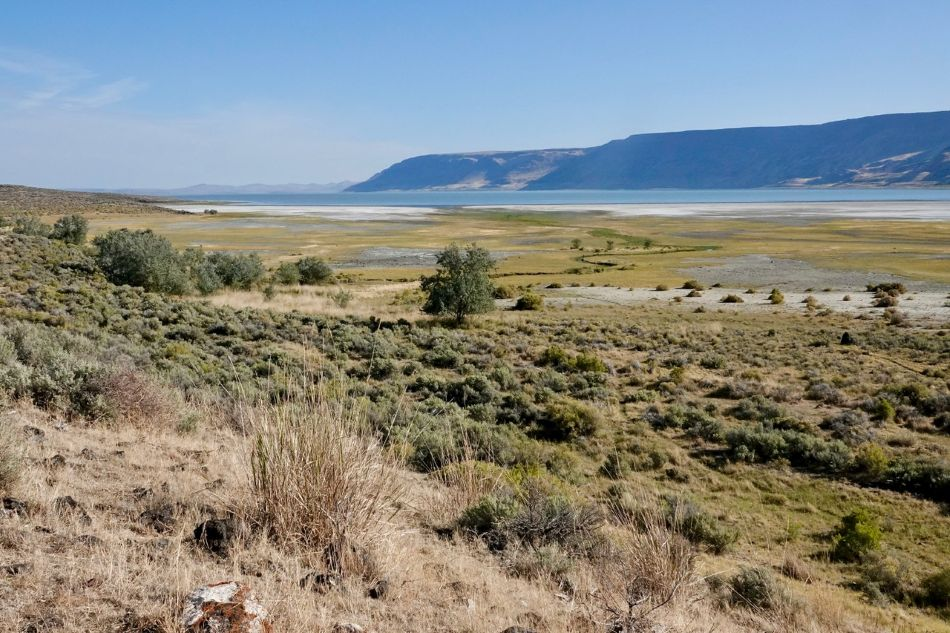

Across Oregon’s vast desert landscapes, rare moments arise where our efforts can impact conservation on a global scale. Today, we have the opportunity to take on an ambitious project to protect a landscape where water, wildlife, and cultural heritage converge at the southern shore of Lake Abert and support annual bird migration from Alaska to Argentina.
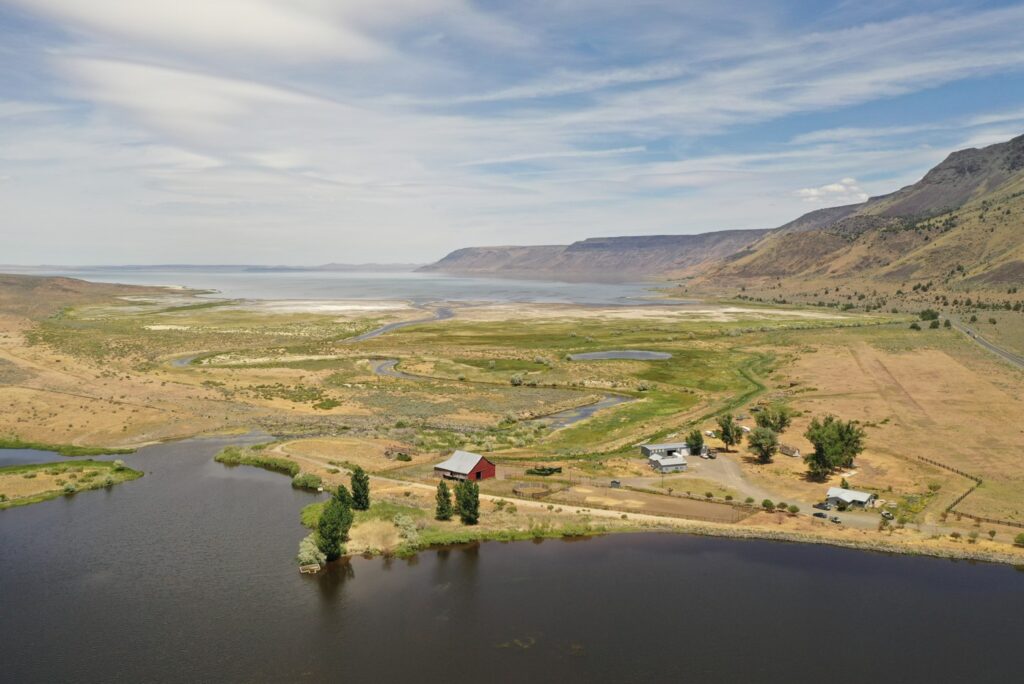
Oregon Desert Land Trust (ODLT) has the incredible opportunity to acquire Rivers End Ranch—expanding our connected network of protected lands, safeguarding crucial migratory bird habitat along the Pacific Flyway, honoring ancient Indigenous heritage, and sustaining vibrant working lands across the Chewaucan basin. Spanning 6,640 acres with significant water rights, the ranch sits at an extraordinary ecological, cultural, and agricultural crossroads. Securing this key property enables ODLT to serve as a unifying, grounded partner at a critical moment for one of the West’s most irreplaceable terminal lake ecosystems.
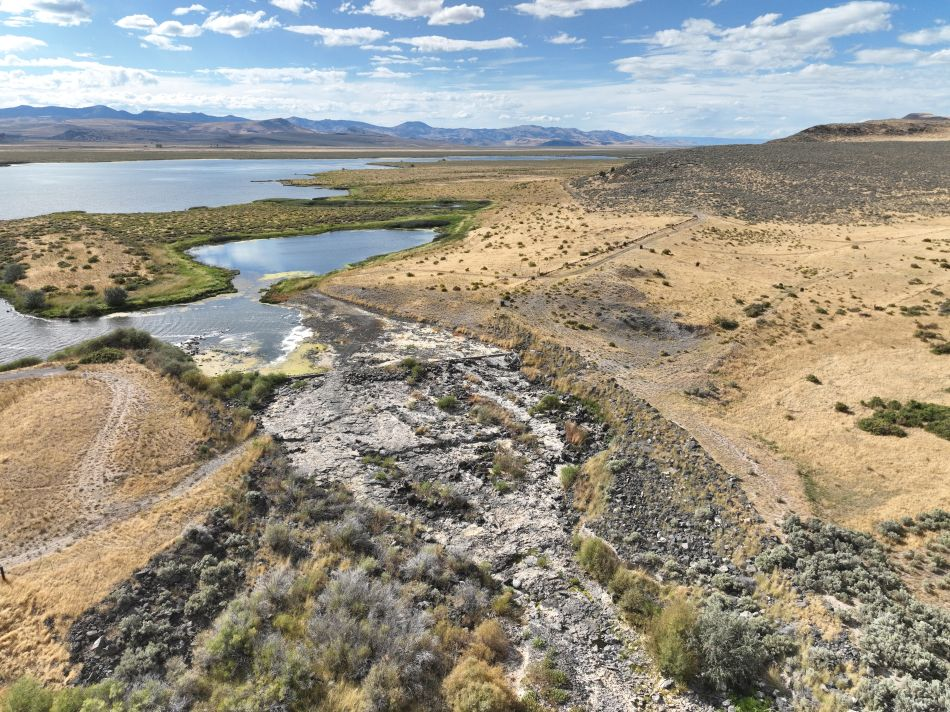
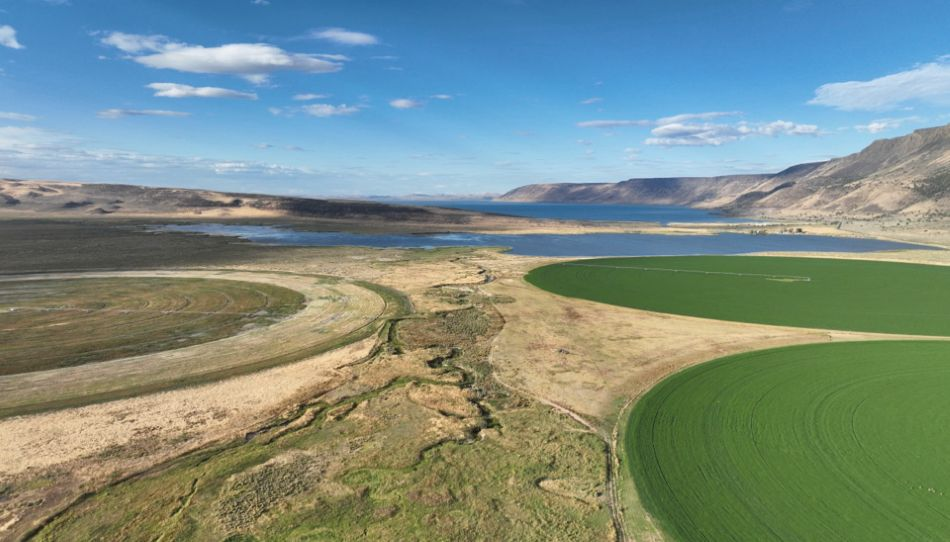
Given its pivotal role in the watershed, the ranch (which includes Rivers End Reservoir, several miles of the Chewaucan River and associated tributary streams, and the southern shores of Lake Abert) has been a focal point for long-standing challenges surrounding water allocation, ecological health, and cultural preservation. In 2023, Oregon’s governor convened the Partnership for Lake Abert and the Chewaucan (PLACe) to create shared long-term solutions for the watershed.
While perspectives vary on Rivers End Reservoir’s exact hydrological influence, most stakeholders agree that collaborative management of these flows will be integral to resolving historical water conflicts, restoring fragile ecosystems, and honoring Tribal heritage in the basin. This is a rare opportunity to unite Tribes, conservation groups, agencies, and community partners to conserve, restore, and steward a wild and working landscape that benefits wildlife and people alike.
ODLT needs your support to make this acquisition a reality before our April 2027 closing deadline. The total cost to acquire Rivers End Ranch, complete necessary due diligence, and establish a permanent stewardship reserve to support long-term management of the property is approximately $12.8 million. ODLT is pursuing state and federal funding, and individual supporters have already stepped forward to commit over $3 million to the effort, but we still need to raise an additional $2.6 million in donations and commitments to protect Rivers End Ranch forever.
ODLT Board Member Autumn Muir lives and works in Lake County and brings community members together to create solutions for the unique issues facing the region, as ODLT is doing 100 miles to the east at Trout Creek Ranch.
“By working with neighboring landowners and combining science with local knowledge, we can explore practical solutions that benefit both the land and the people who call this area home,” she said.
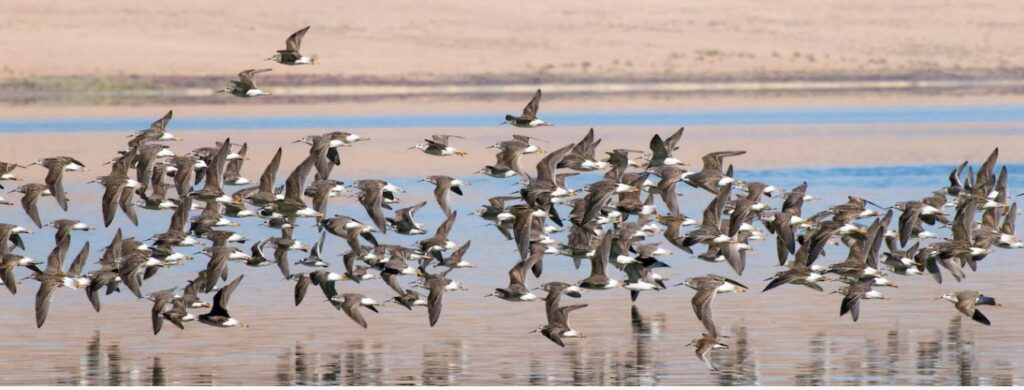
Ron Larson’s “Waterbirds of Lake Abert” shows a variety of birds and their behaviours.
Conserving Wildlife Habitat and Helping Lake Abert
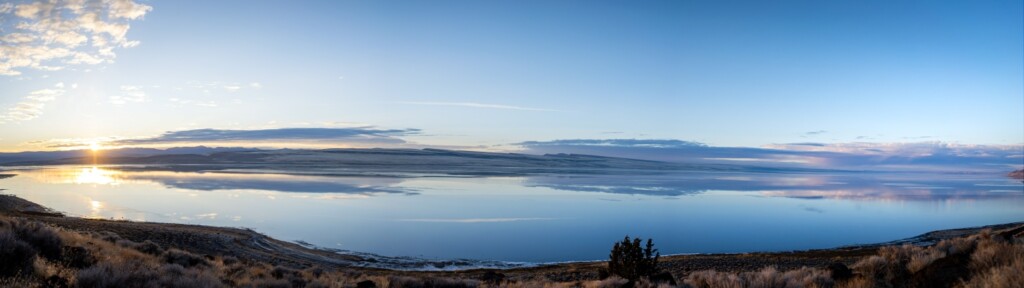
Identified by the Oregon Department of Fish and Wildlife as a Priority Wildlife Connectivity Area, Rivers End Ranch hosts an incredible diversity of high desert species. Adjacent Lake Abert is Oregon’s only hypersaline lake and one of the Great Basin’s few large terminal saline lakes, functioning as a vital refueling station for hundreds of thousands of shorebirds and waterfowl migrating along the Pacific Flyway. Nearly 80 species of waterbirds—including American avocets, black-necked stilts, Wilson’s phalaropes and northern shovelers—gather here to feed on abundant brine shrimp, building the necessary energy required for their grueling 5,000-mile migration to South America.
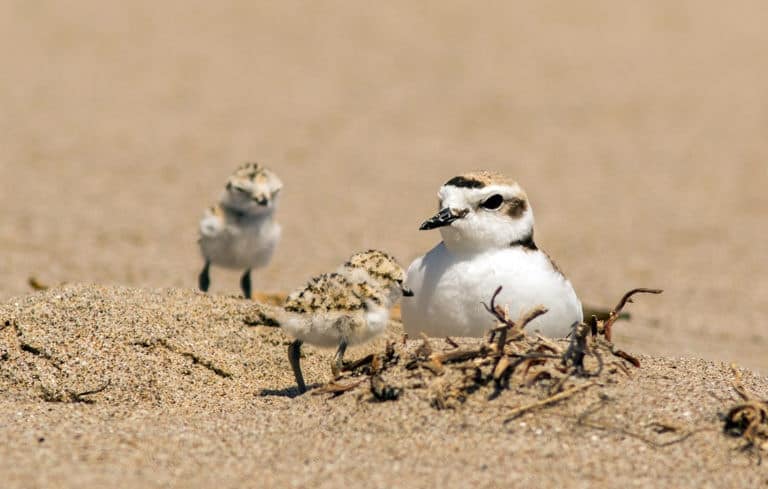
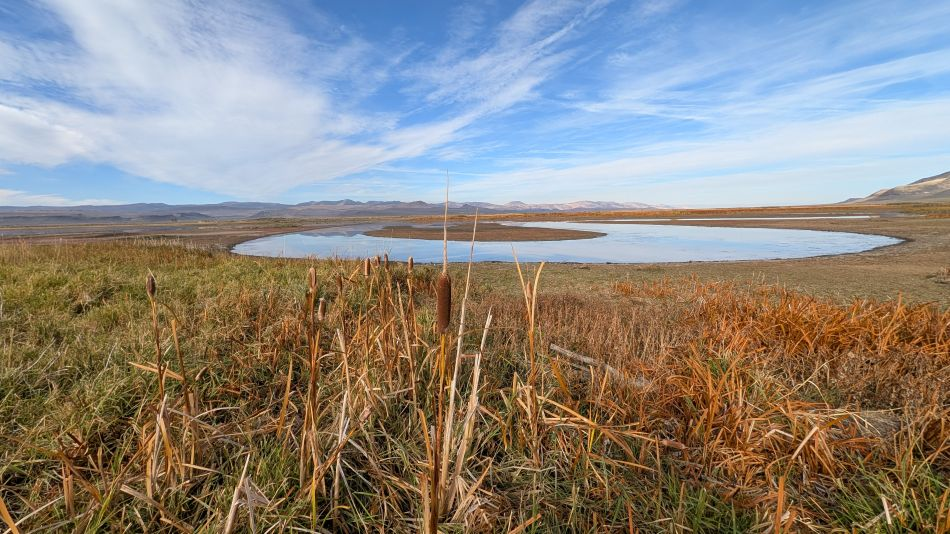
Beyond being a lifeline for migratory birds, the lake ecosystem supports over a third of Oregon’s population of western snowy plovers. The Rivers End Ranch property’s surrounding river channels, spring-fed ponds, and wet meadows also provide habitat for native redband trout, trumpeter swans, snow geese, and California bighorn sheep.
The dam at Rivers End Ranch controls freshwater flows into Lake Abert during low water periods. In recent years, severe low water levels from a variety of factors have threatened the lake’s delicate ecology. ODLT proposes to modify water management to best support this irreplaceable bird haven.
As the executive director of PLAYA, an arts and sciences residency program in nearby Summer Lake, Ana Varas is someone deeply connected to the Lake Abert region who has witnessed firsthand how ecologically and culturally extraordinary this landscape is. She says its fluctuations in water levels over recent decades have been deeply concerning to many who care about the health and future of this place.
“The property’s habitat values and proximity to Lake Abert and the Chewaucan River make it uniquely important to regional ecological resilience,” she continued. “I’m particularly encouraged by the project’s emphasis on Tribal engagement, cultural resource stewardship, and collaborative management. This approach reflects the kind of thoughtful, inclusive conservation our state should champion.”
Protecting Cultural Heritage & Restoring Tribal Access
Rivers End Ranch lies within the ancestral homelands of the Northern Paiute, Klamath, and Modoc peoples. For thousands of years, Indigenous peoples have stewarded this landscape, leaving behind sacred burial grounds, village sites, storied rocks, and irreplaceable historical artifacts. Construction of a dam and Rivers End Reservoir in the 1990s disturbed prehistoric sites and unearthed human remains. Oregon’s former State Archaeologist has called this “the largest burial and Section 106 archaeological issue in the history of the [State Historic Preservation Office] program.”
With conservation ownership, ODLT is committed to partnering with regional Tribes to support cultural preservation and stewardship. The acquisition will ensure access for Tribal members to gather, honor ancestors, reconnect with sacred places, and monitor cultural sites and resources. This essential work can prevent further harm and build lasting partnerships that honor the enduring bond between Tribal communities and their ancestral lands.
Maintaining Working Lands
In the high desert, working ranches and healthy ecosystems coexist. ODLT is committed to carrying out this project in a manner that benefits the local community and economy. We will continue paying property taxes that benefit basic community services such as roads and schools. As with other ODLT projects, whenever possible, we hire and purchase needed goods and services locally. Our engagement with communities extends beyond transactions by actively participating in Rangeland Fire Protection Associations, school and 4-H fundraisers and other local initiatives, and offering our facilities for community events to neighboring landowners, Tribes, state and federal land managers, and other partners.
ODLT has been meeting with neighboring landowners to understand how the property’s agricultural land might fit into neighboring farm operations in the future. Similar to Trout Creek Ranch, we will also evaluate adaptive agricultural practices, and water efficiency improvements.
As someone who lived and worked in Lake County for 20 years, Elizabeth Quinn is familiar with the issues around water needs for agriculture and conservation.
“The purchase of River End’s Ranch by ODLT is an excellent way to work towards healthy solutions for degraded Lake Abert,” she says. “I believe this due to the work ODLT is doing at Trout Creek Ranch, which is conveyed not only through positive results for the land, but through respectful relationships built with landowners, conservationists, community members, and Indigenous Tribes. I see the work ODLT is doing as contributing to a greater need of engagement with and dignity for rural communities by being a humble and strong partner to those communities.”
Beyond wildlife and working lands, Rivers End Ranch could offer a gathering space for the regional community. ODLT is committed to providing access for scientific research, student field studies, and community gatherings—such as meetings for the Partnership for Lake Abert and the Chewaucan—to foster collaborative watershed conservation. Bringing people together to share their knowledge and develop a better understanding of the basin is fundamental to addressing the opportunities and challenges facing this unique region.
Supporting Stakeholder Access
Beyond wildlife and working lands, Rivers End Ranch could offer a gathering space for the regional community. ODLT is committed to providing access for scientific research, student field studies, and community gatherings—such as meetings for the Partnership for Lake Abert and the Chewaucan—to foster collaborative watershed conservation. Bringing people together to share their knowledge and develop a better understanding of the basin is fundamental to addressing the opportunities and challenges facing this unique region.
Keith Kreuz has bittersweet memories of Lake Abert, but an optimistic outlook. As an owner of Oregon Desert Brine Shrimp Co., he harvested brine shrimp there for 35 years. The lake went dry in 2014, as did the business. He recognized Lake Albert’s unique ecological, geological, historical, and cultural value and the need to conserve it. For all those years, Kreuz felt his advocacy fell on deaf ears. Now, he feels ODLT has a unique opportunity to restore Rivers End Ranch and is hopeful that more people and agencies will listen to the call for help.
“Dedicated scientists, environmental groups, local Tribes and landowners are all now working together for the benefit of all to restore and preserve Lake Abert and surrounding lands. The Rivers End Ranch, with its water rights, are an integral part of the solution.”
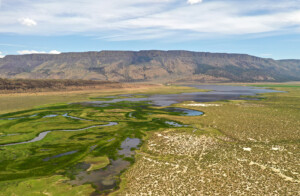
Feature image: The Chewacan River and wetlands at the upper end of Rivers End Reservoir.
Published October, 2026
How to Get Involved
Contribute: Donors giving $1,000 or more can request a copy of Ron Larson’s book, A Natural History of Oregon’s Lake Abert.
Attend an Info Session: Join us online to learn more about the project and ask questions:
- Wednesday, November 11th, 7:00–8:00 PM PST — Register here
- Monday, November 23rd, 6:30–7:30 PM PST — Register here
Celebrate With Us: Join an event that highlights all we’ve accomplished together and what’s on the horizon!
- ODLT Online Year-End Celebration (featuring in-depth look at Rivers End Ranch)
- Tuesday, November 17th, 7:00–7:30 PM PST — Register here
- ODLT Bend, Oregon Year-End Celebration (featuring Rivers End Ranch)
- Thursday, November 19th, 6:00–8:00 PM PST — Register here
- ODLT Online Year-End Celebration (featuring in-depth look at Rivers End Ranch)
Learn More
- Watch an episode of The Great Outdoors by Central Oregon News Daily on how Lake Abert is an important gathering spot for birds.
- Learn what Lake Abert birds have been documented through community science efforts on eBird.
- Interested in really digging in? You can take an illustrated exploration on the ecology, geology, flora, fauna, and local history of the surrounding region with the book “A Natural History of Oregon’s Lake Abert in the Northwest Great Basin Landscape.”
More perspectives
Related Reads
Together, for Rivers End Ranch!
A project with local and global impacts.
Happy Recognitions
A conversation with Cindy Talbott Roché — Botanist, Illustrator and Author — Bend, OR
Listening to the Landscape
We've made way for restoration at Trout Creek Ranch.
Desert Duet
A conversation with SageCon Coordinator Rachael Davee & Oregon Department of Fish & Wildlife Biologist Andrew Walch — Redmond, OR
A Summer to Remember
College interns were a huge help over the summer.
A Range of Change
Trout Creek Ranch updates help conservation and community.
Grouse Count
We've joined in state surveys of greater sage-grouse.
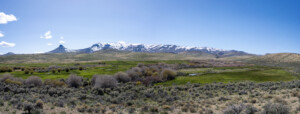
Reaching for new heights in conservation
Together, we can conserve Disaster Peak Ranch!
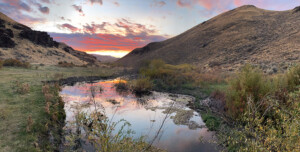
Going with the flow
We're restoring a creek to help fish and wildlife.
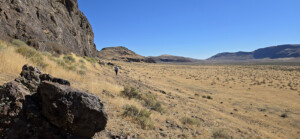
A land of learning
Local Tribal members shared stewardship practices to inspire youth.
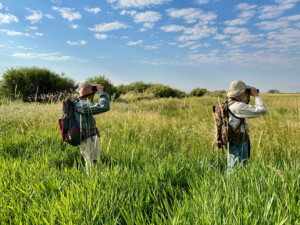
Looking out for the birds
Volunteers help guide restoration plans with wetland bird surveys.
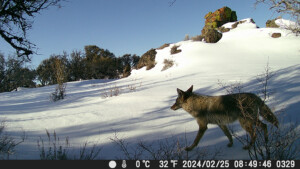
Watching wildlife
Wildlife cameras help with conservation plans for animals throughout the year.
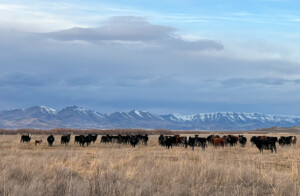
Virtual fences mooove cows online
Virtual fence is a new technology that can help land managers maintain wildlife connectivity in permitted grazing areas.
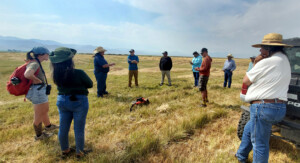
Tribal Gatherings
Tribal leaders discussed the Native history and stewardship of their homelands at Trout Creek Ranch.
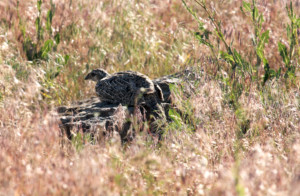
Research fueled by fire
Oregon State University finished 10 years of fieldwork on sage-grouse responses to wildfire.
Tribal Stewards
Tribal teens lead on conservation efforts through Northwest Youth Corps.
Spring returns
Rod Klus returns to researching sage-grouse for Oregon Department of Fish and Wildlife.
Mountains of Research
Researchers spent a summer in the mountains and left with more than data.
Spreading wings in conservation
Jack Strang created new connections to the high desert during our first internship.
Neighbors helping neighbors fight fires
Rangeland Fire Protection Associations protect the high desert and each other.
Watching for wildfires
A live camera on Beatys Butte helps wildfire efforts in the high desert.
Spring into recreation & conservation
John Sterling works at the intersection of both as a volunteer board member.
Balancing a range of concerns
Angela Sitz brings wild and working lands together.
Wildlife encounters
Land Trust volunteers are keeping track of animals on the ground and on camera.
Keeping it connected
Closing the unnatural gap between wildlife refuges opens doors for pronghorn.
Seeing the land in a different Light
Northern Paiute Tribal member Wilson Wewa brings a Native perspective to ODLT's work.
