
Skip to content Skip to footer

Listening to the Landscape

Years of planning and community collaboration are shaping the next chapter of Trout Creek Ranch. Working alongside partners, neighbors, volunteers and researchers, we’re laying the groundwork for future restoration efforts. From wetland surveys and design plans to virtual fencing, all are meant to help native plants, wildlife and the surrounding community.

Trout Creek Ranch received its name from the creek running through it, but the waterway winding across the ranch is much more than a namesake. It sustains thousands of acres of wet meadows, supports local and seasonal wildlife, and connects a working landscape that has shaped the Fields Basin community for generations.

Since Oregon Desert Land Trust purchased the nearly 17,000-acre ranch in 2021, work has revolved around balancing restoration, wildlife habitat, ranching and community values. Early efforts centered on removing obsolete fence and infrastructure, updating needed facilities and equipment and creating space for future restoration.

The focus is now on understanding how Trout Creek Meadows function today — from water movement and plant communities to bird habitat and seasonal grazing patterns. Years of research, observations and conversations with neighbors and partners are shaping the future of the meadows. All of this information will move us from planning into the next phase of restoration at Trout Creek Ranch.

“Essentially, we’ve done the work to clear the path. Now we’re making thoughtful management decisions that are allowing restoration to begin.”
Brooke Gray
ODLT Stewardship Program Manager

Designing for Restoration and Resilience

Trout Creek has taken many forms over time. Some upstream reaches still resemble a natural, beaver-formed system, while other sections were historically confined by feedlots, irrigation ditches, roads and aging infrastructure. Those changes limited the creek’s natural function and reduced habitat quality for native plants and wildlife. Removing the portion of the historic feedlot that once spanned Trout Creek opened the door for the creek and surrounding wetlands to begin recovering more naturally, but even more is possible.

Trout Creek meanders along fence lines and a feedlot in 2023. —Garth Fuller

A multi-year restoration initiative is now helping chart a different future for the meadows with help from The Nature Conservancy, Oregon Department of Fish and Wildlife, U.S. Fish and Wildlife Service, Harney Soil and Water Conservation District, Intermountain West Joint Venture, University of Vermont Field Naturalist Program and others. The collective goal is to improve habitat for native fish and wildlife, including the Alvord chub and priority avian species, while restoring healthier wet meadows and more natural seasonal water movement. Partners are also exploring ways to increase native vegetation and support regenerative agriculture practices as restoration plans move forward.

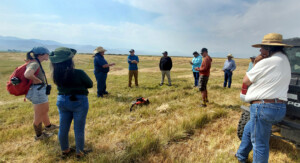
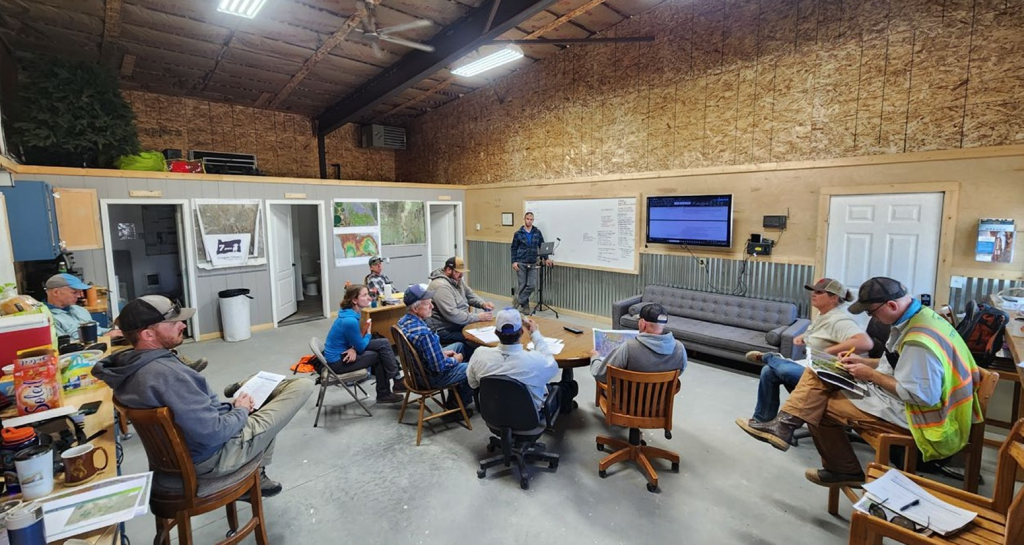
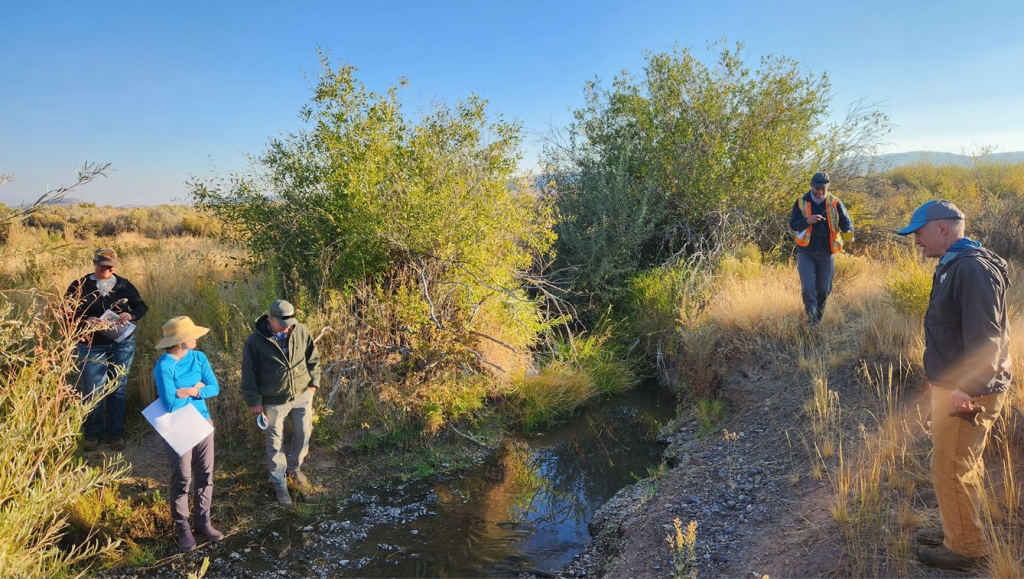
Goals and design criteria were developed collaboratively with stakeholders and Tetra Tech through in-person meetings and field trips at Trout Creek Ranch in the fall of 2025. — Dylan O’Leary

As part of the process, a preliminary restoration design was created this spring exploring how Trout Creek could reconnect with its historic wetlands. It aims to restore more natural hydrology and wetland function while recognizing the long history of grazing across the landscape. ODLT leases grazing permits to local ranchers and works collaboratively on adaptive management strategies that support both habitat health and seasonal ranching activities. 

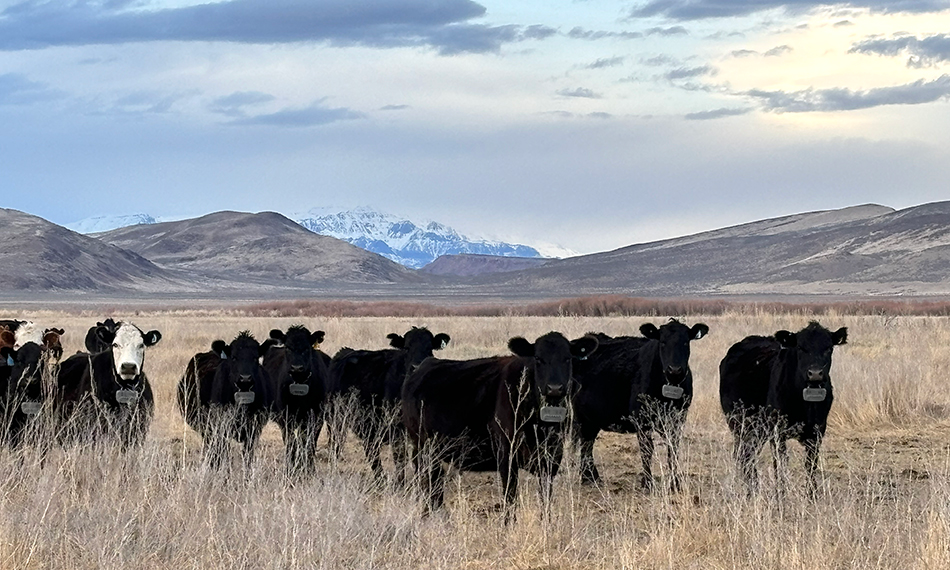
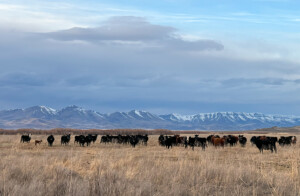
One evolving tool is virtual fencing, which allows land managers to remotely guide GPS-collared cattle across the landscape rather than rely on permanent fencing. Among other benefits, the pilot program is helping ODLT and neighboring ranchers test new ways to address invasive species and create strategic firebreaks. 

Cattle wear electric collars during tests of a virtual fence program at Trout Creek Ranch. — Brooke Gray

For ODLT Stewardship Program Manager Dylan O’Leary, the shared learning with partners and lessees has been especially rewarding as virtual fencing moves from concept to practical application in the field.

"What I'm excited for is the larger understanding of what we can achieve, what we can't achieve and what we should achieve”
Dylan O'Leary
ODLT Stewardship Program Manager
Partners join in site visits along Trout Creek. — Dylan O’Leary

Other proposed improvements range from reconnecting side channels, restoring floodplain connectivity, expanding wetlands, replacing undersized culverts, and also installing willow trenches and beaver dam analogues (BDAs) to slow and spread water across the landscape. The goal is not simply to reshape a creek channel, but to strengthen the health and resilience of the meadows as a whole.

“It’s super exciting,” Gray shared. “We’re really close. The ball is literally starting to crest over the hill. Look out!”

Learning from the Landscape

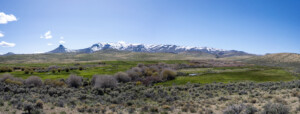
Before large-scale restoration moves forward, we’re working with partners to better understand the ecological communities already thriving across Trout Creek Ranch. The wet meadows surrounding headquarters form a rich mosaic of riparian corridors, sagebrush steppe, alkaline flats, salt desert scrub, and seasonally flooded wetlands — each supporting plants and wildlife uniquely adapted to southeastern Oregon’s high desert.

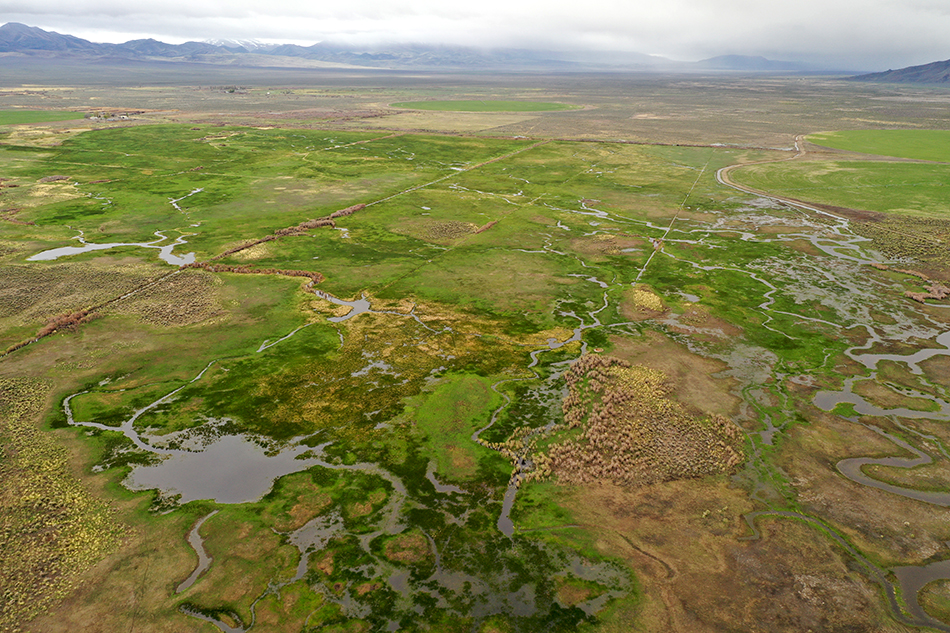
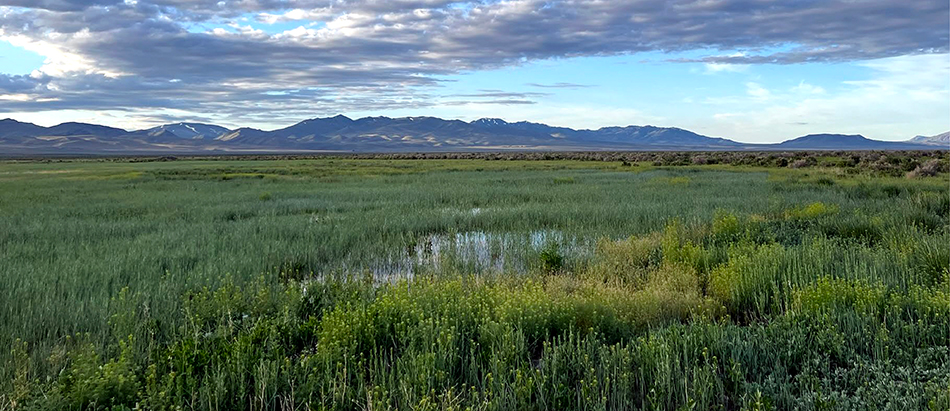
Plants rebound in the meadows after a wet spring in 2023.— Garth Fuller

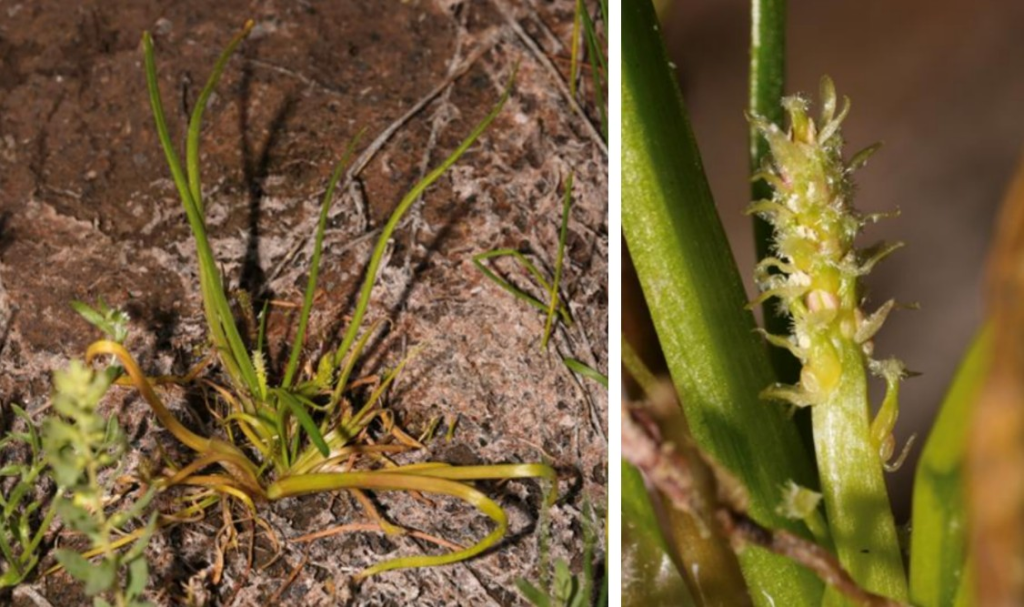
A botanical survey supported through a partnership with the Coalition of Oregon Land Trusts documented rare, threatened, and sensitive plant species across the area last year. Six sensitive species were identified, including Alvord milkvetch, iodine bush, transmontane sand-verbena, and flowering quillwort. Several occur near the northern edge of their range in Oregon, highlighting the ecological significance of the landscape.

The sensitive species flowering quillwort (Triglochin scilloides) blooms during June surveys. — Turnstone Environmental

This summer, a graduate student from the University of Vermont’s Field Naturalist Program, Darian Rubow, will research how birds use the wet meadows, especially in relation to vegetation and water conditions. The data will provide a clearer picture of how different parts of the meadow support birds throughout the season, and how future restoration efforts could improve habitat conditions

Following the Birds

One of the clear signs of the meadows’ importance arrives each spring on the wings of migrating birds. Thousands of acres of wetlands at Trout Creek Ranch provide important habitat within the Southern Oregon-Northeastern California (SONEC) region, one of the Pacific Flyway’s most significant migration corridors. Roughly 5,700 acres of the ranch have been identified as SONEC priority habitat for waterfowl, shorebirds, raptors, and songbirds.

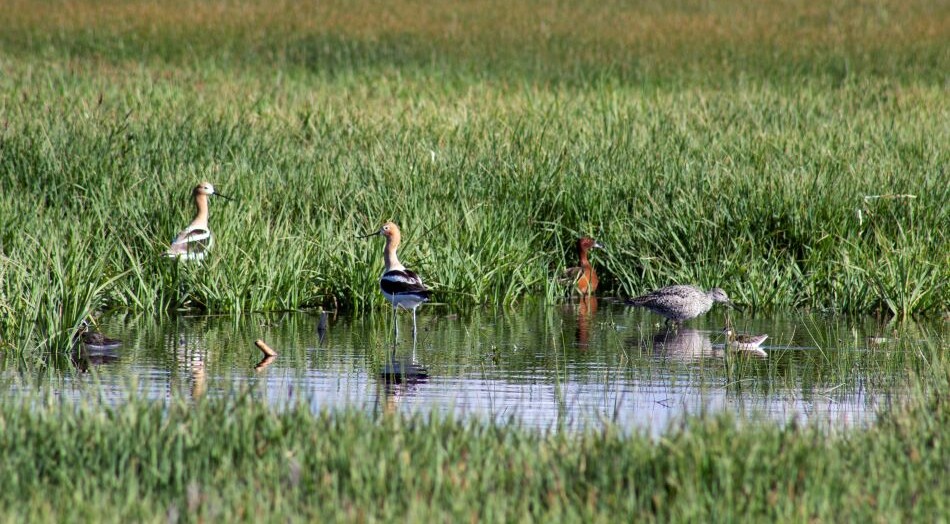
Phalaropes, avocets, willets and cinnamon teal share the spring waters of the wet meadows. — Brent Fenty

This spring marks our third year of volunteer bird surveys documenting how birds use the meadows throughout migration and breeding season. Last year, volunteers Kathy and Dan Wilson-Fey joined us for a memorable morning that started at dawn

“I still have images of short-eared owls and Wilson’s snipes swirling in my brain and warming my heart.”
Kathy Wilson-Fey
ODLT Volunteer


Cranes, avocets, phalaropes, curlews, bobolinks, harriers and owls were fellow favorites found in the meadows, while colorful and talkative buntings, warblers, wrens and chats made appearances among sedges and willows of the neighboring Spring Creek.

“What a beautiful place. I learned about better fencing for pronghorn antelope, land reclamation work and more.”
Dan Wilson-Fey
ODLT Volunteer
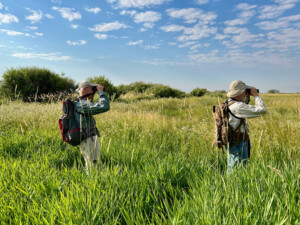
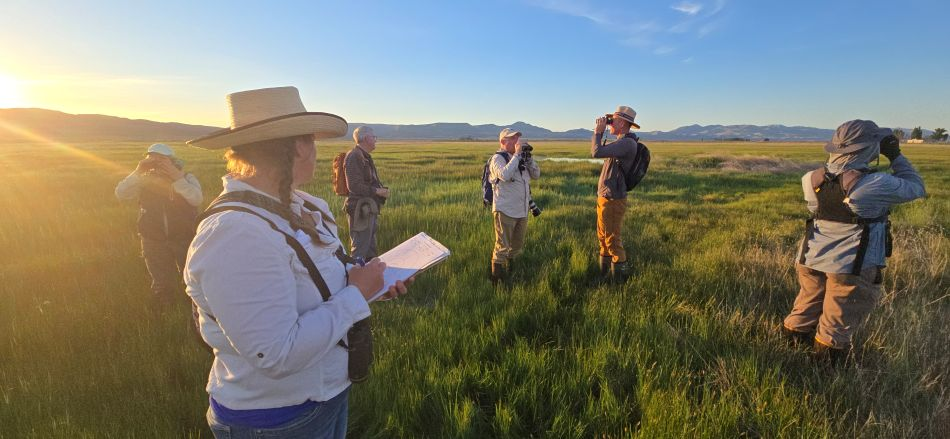
Bird survey volunteers start at sunrise in the meadows. Brooke Gray records data while, from left, Kathy and Dan Wilson-Fey, Alan Mauer, Brian MacDonald, and Duke Tufty look and listen for birds. — Kharli Rose

The work is for the birds, but also about people. Through volunteer efforts, restoration projects, and shared stewardship, Trout Creek Ranch continues to strengthen connections between conservation and community.

Building Toward the Future

In recent years, volunteers and partners helped remove feedlot infrastructure from Trout Creek, install wildlife-friendly fencing, renovate community gathering spaces and set the stage for big projects. The chapter ahead remains ambitious and deeply collaborative as each study, volunteer event or conversation supports a healthy, more connected landscape for wildlife and people alike. 

Over the next several years, ODLT and partners will refine restoration plans for Trout Creek’s wet meadows through monitoring plants, birds and water movement, along with grazing and growing patterns. The goal is to identify practical changes that improve habitat for wildlife while supporting the broader landscape and community. We’re grateful for everyone involved in these enriching efforts and are eager to share these stories as they unfold.

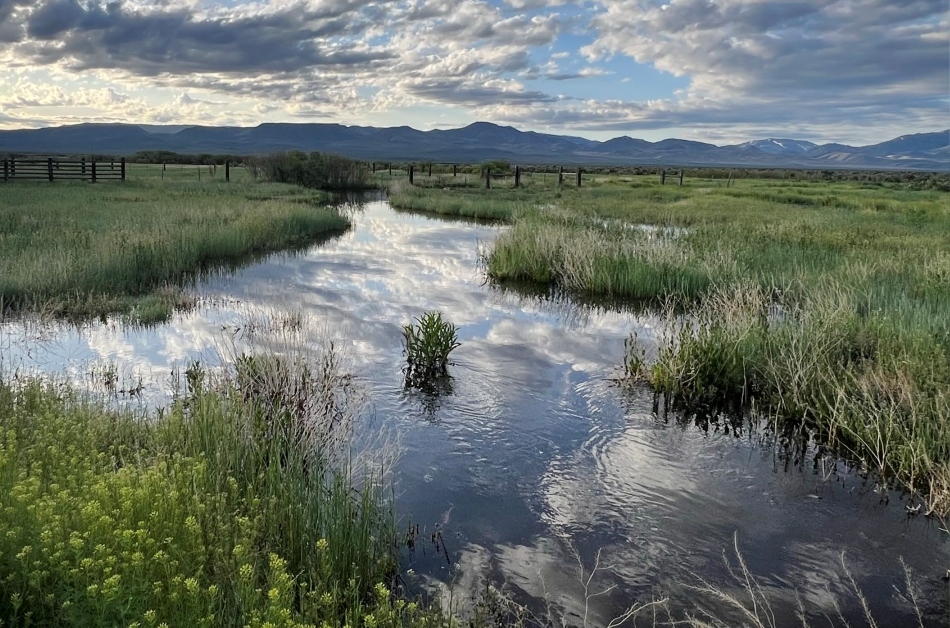
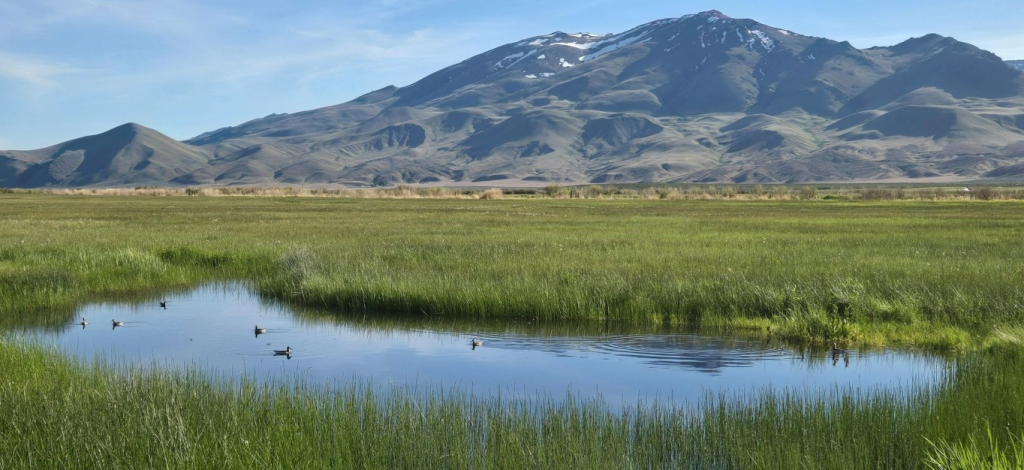
Phalaropes float across a small pond during a wet meadows bird survey in May of 2025. — Kharli Rose

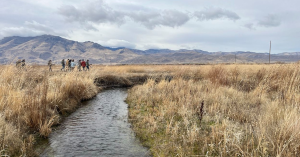
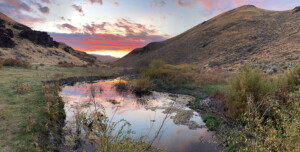
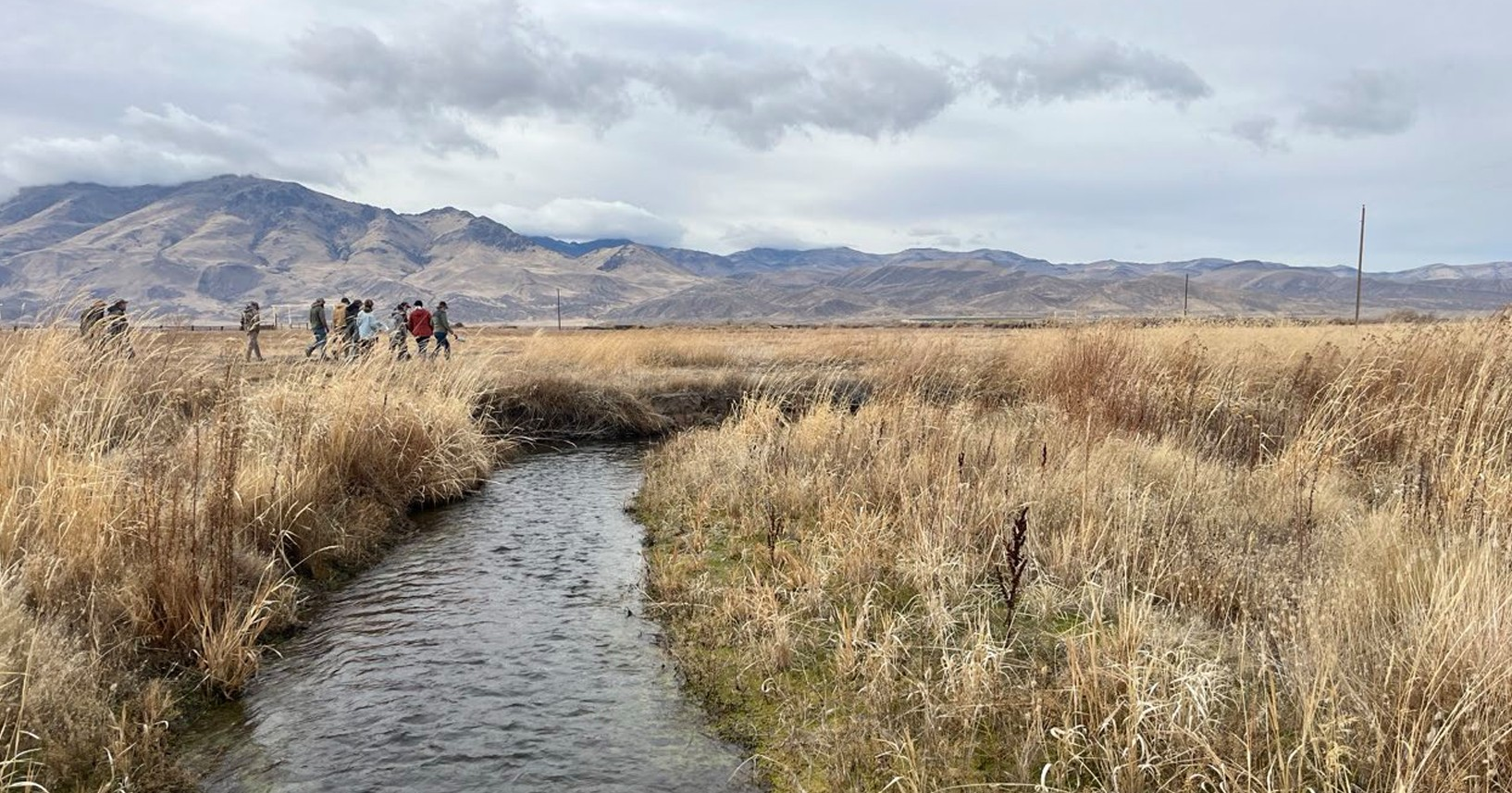
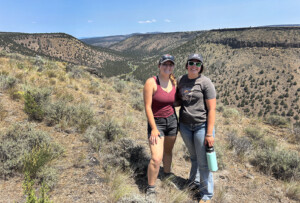
Feature image: Staff and partners walk along the existing mainstream of Trout Creek in 2025 while assessing ways to reconnect it with its historic wetlands. — Dylan O’Leary

Published May, 2026

Learn More

Discover details of the highlighted regions


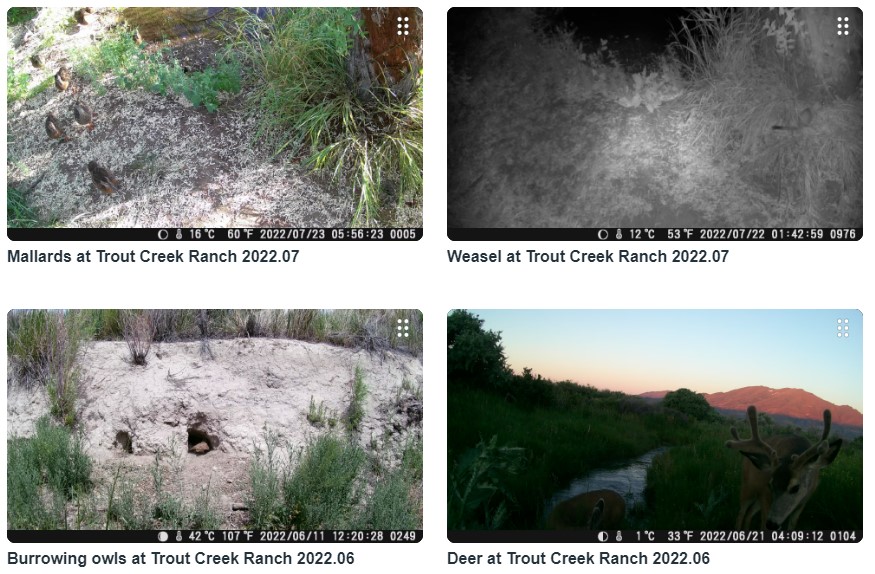
View Wildlife Camera Videos

More perspectives


Related Reads

Desert Duet

A conversation with SageCon Coordinator Rachael Davee & Oregon Department of Fish & Wildlife Biologist Andrew Walch — Redmond, OR
Grouse Count

We've joined in state surveys of greater sage-grouse.
Watching wildlife

Wildlife cameras help with conservation plans for animals throughout the year.
Tribal Gatherings

Tribal leaders discussed the Native history and stewardship of their homelands at Trout Creek Ranch.
Research fueled by fire

Oregon State University finished 10 years of fieldwork on sage-grouse responses to wildfire.
Tribal Stewards

Tribal teens lead on conservation efforts through Northwest Youth Corps.
Spring returns

Rod Klus returns to researching sage-grouse for Oregon Department of Fish and Wildlife.
Wildlife encounters

Land Trust volunteers are keeping track of animals on the ground and on camera.
Keeping it connected

Closing the unnatural gap between wildlife refuges opens doors for pronghorn.