

A Conversation with Jenner & Harland Yriarte
Steens Mountain High Altitude Running Camp Organizers
Frenchglen, Oregon
by
Ellen Waterston
You can’t write about Jenner Yriarte (pronounced ee-ree-AR-te) without writing about his father, Harland. And it’s hard to write about Harland without also writing about Harland’s parents and grandparents. Starting in 1919, Yriartes and their kin made their way from Basque Country in Spain to Oregon’s desert where they have left an indelible imprint of hard work, inventiveness, cultural and familial pride. The high desert, and particularly the majestic Steens Mountain, thanks them. Here’s why.
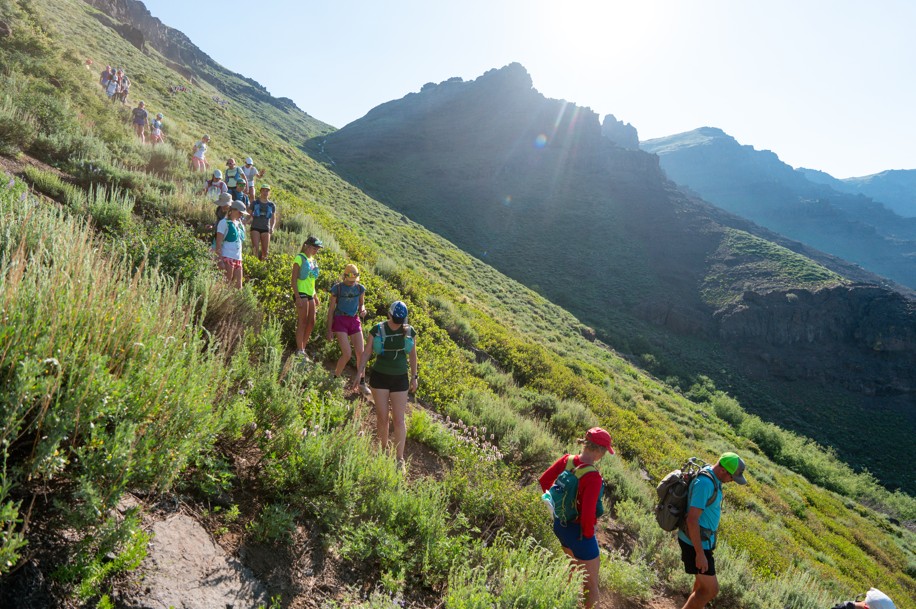
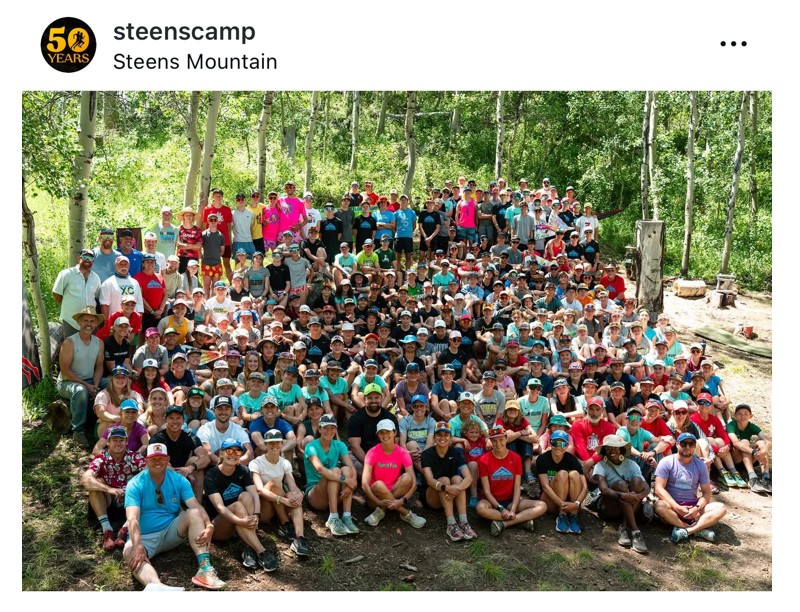
The summer of 2024 was the 50th anniversary of what is famously known as the Steens Mountain High Altitude Running Camp, Harland Yriarte’s brainchild. Thanks to a three-week BLM permit, the coed camp (located 78 miles from Burns and 15 miles from Frenchglen) conducts two six-night sessions. Each session welcomes 180 high school cross country students from all around the world who are introduced to the rugged beauty of Steens Mountain while on the move running, sprinting and hiking. They are also introduced to the no-nonsense Yriarte philosophy of life, one that will stand them in good stead their entire lives, such as this Steens Warrior’s favorite, “Tired within? Just keep taking steps, never give up, never give in.”
Jenner Yriarte, 48, received his undergraduate and graduate degrees in education from Southern Oregon University and Oregon State University, respectively. He went on to be the head coach for track and field at Grants Pass High School before committing to his current full-time classroom teaching schedule and focusing on running the family business (Steens Mountain Running Camp). His educational and professional path was fundamentally shaped by summers spent as a child on Steens Mountain. “In the summers, I grew up at Camp and on the mountain. I started out patching rafts and painting tent stakes and digging trenches for tents.” Around 18, he graduated to a more significant role, he says with a wink. “I pumped outhouses, helped with maintenance, and emptied trash. Dad always wanted me to get my hands dirty, so to speak, I’m lucky to have a dad like that.”
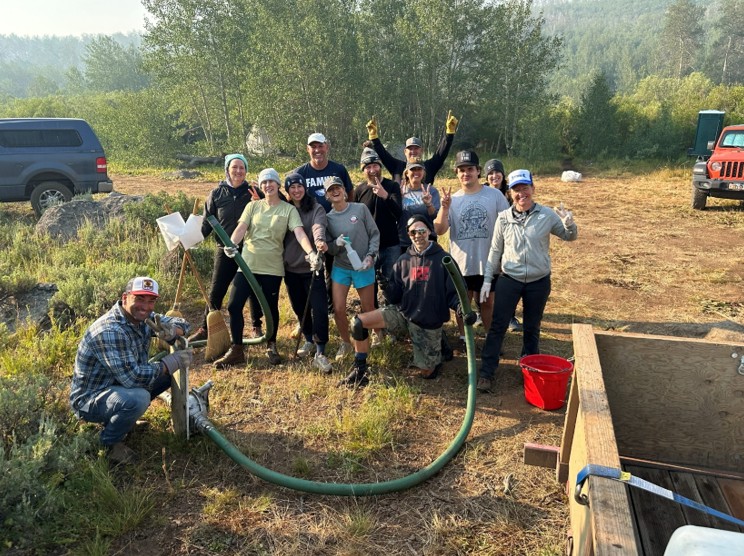
But those chores are behind him now. The summer of 2025 was significant for another reason. It was the first summer that Jenner ran the camp on his own. After half a century, Harland, 78, passed the baton to his son. As the chief camp coordinator, Jenner is now in charge of hiring staff and coordinating volunteers. He oversees menus, medical preparedness (six medical staff per session), transportation, scheduling and accommodations. “Campers sleep in MASH-style army tents,” says Jenner. Each 20-person tent is the responsibility of a camp assistant (former campers themselves), currently competing at the collegiate level. Jenner is confident about his new responsibilities and has reason to be. “I have an understanding of the camp from a grassroots level which has helped me through the transition. Dad had this in mind to begin with.”
Reflecting on this change, Harland Yriarte has nothing but good things to say. “(Jenner) has been with me every year of the Steens Camp since he was three years old. He knows the camp inside and out. He loves kids. He loves people. He is a natural-born teacher and coach. He loves the mountain. He loves his staff.” Harland has no doubt his son will preserve “the goodness of the camp for many more sunrises and sunsets!”
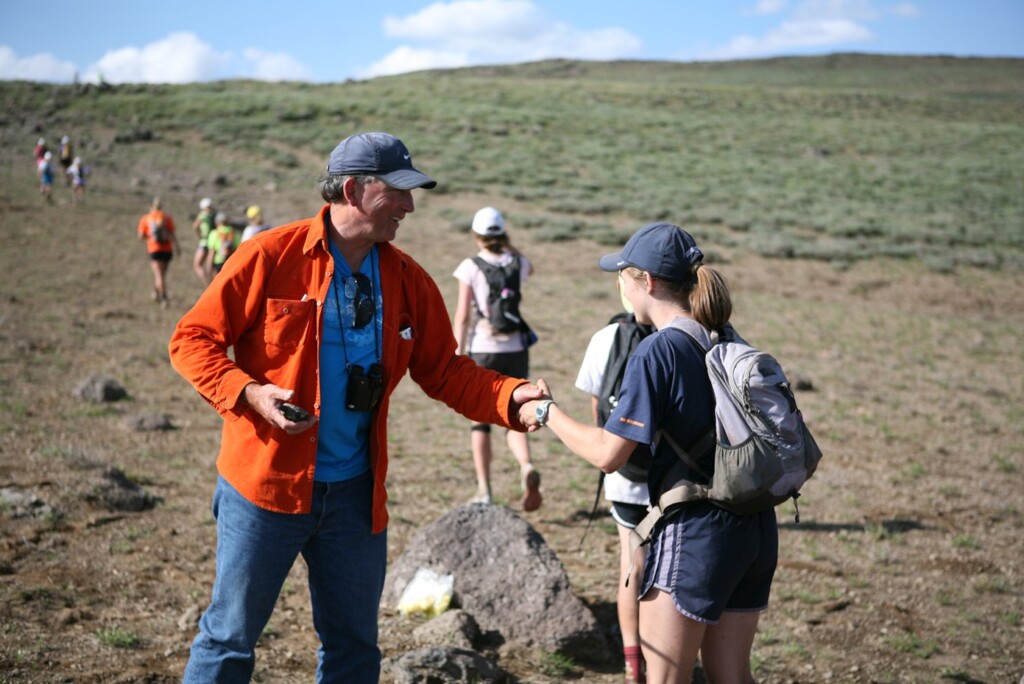
Watching his father grow the camp, Jenner not only learned the day-to-day operations but also his father’s approach to coaching and to life itself, a philosophy inspired by Steens Mountain. Harland, something of a legend in the world of running, likes to say that the lessons the mountain teaches “are lifelong and have no time expiration.” Some notes from Harland’s coaching and life playbook include:
- Be accountable.
- Do your best every day.
- Don’t do stupid.
- Hand struggling teammates flowers, not rocks.
- Be honest with yourself and others, even when tired.
- Do one or two things well … and the rest well enough.
- There are a couple of pains of life, the pain of discipline or the pain of regret. Which will you choose?
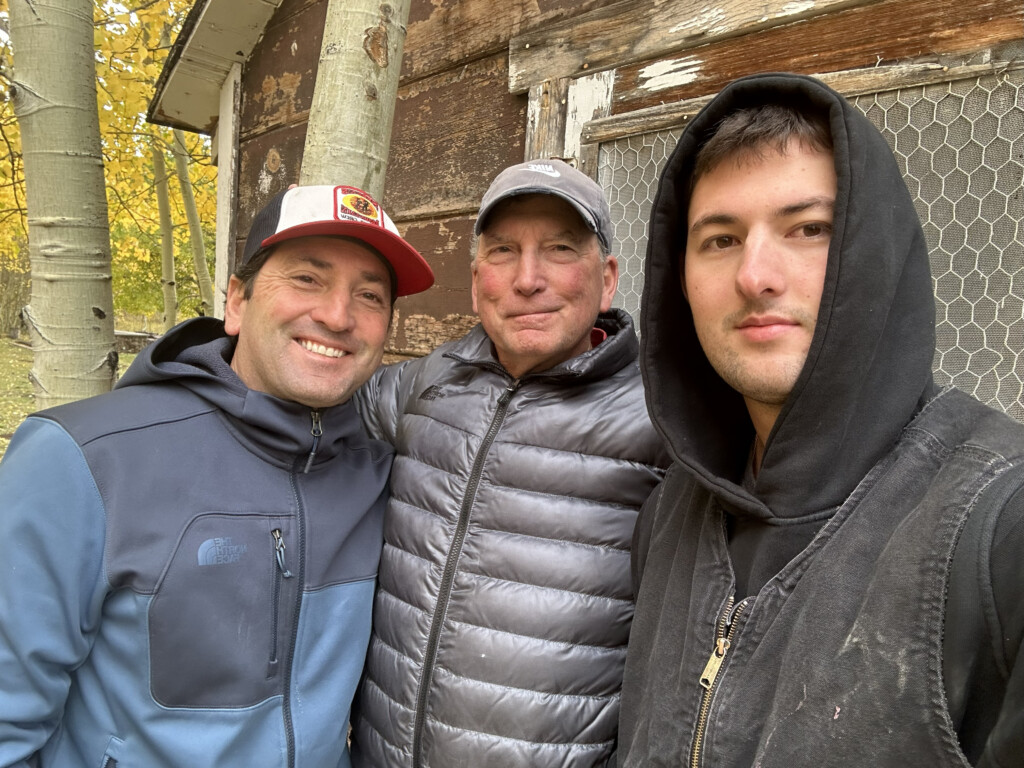
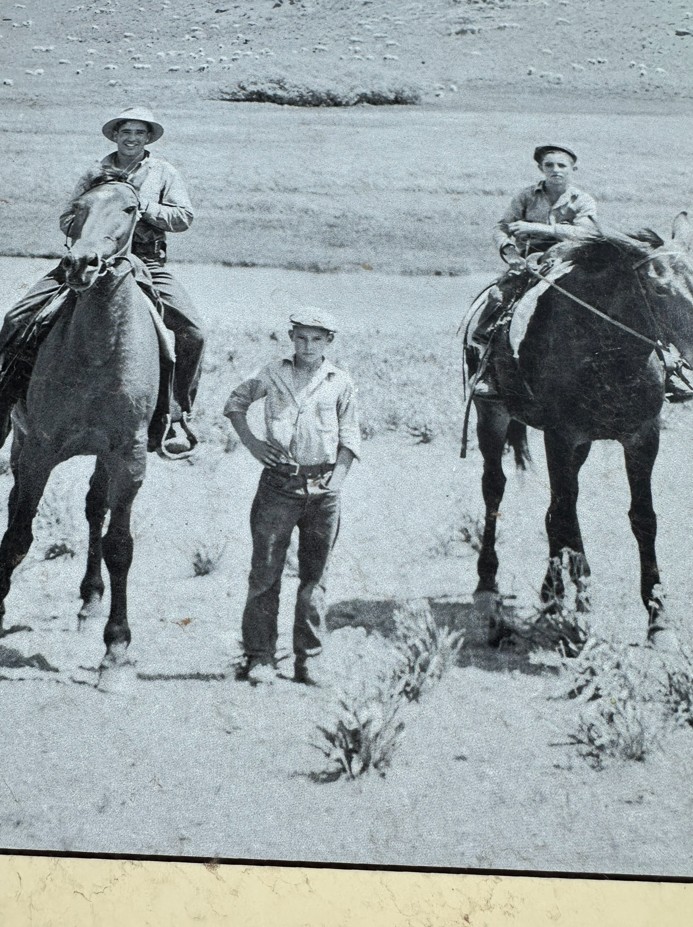
Like father, like son, Harland also completed his undergraduate studies at Southern Oregon University and received his master’s in education from the University of Oregon. He went on to a lauded career as a head track and field and cross country coach at Lane Community College before serving as the college’s athletic director from 1991-2002. But not before first cutting his teeth as a young track coach at Brookings Harbor High School in Brookings, Oregon. After a few seasons, so the story goes, Harland Yriarte had finally heard enough excuses from his students for missing practice or turning in a disappointing finish at a meet. A standout Oregon athlete himself, Harland grew up on his family’s ranch near the Malheur National Wildlife Refuge. He’s the grandson of high desert ranchers and the great-grandson of an immigrant Basque shepherd who summered his sheep on Steens Mountain. In the Yriarte tradition, hard work and teamwork were assumed; complaining was not an option. So, no surprise, in 1975, Harland announced to his 12 Brookings track students that if they wanted a spot on the team the following fall, they would have to join him on Steens Mountain that summer for a training camp. He assured them that after attending the camp they would never be daunted by a cross country course again. “I knew what this mountain did for me,” he said in a Eugene Register-Guard article. “If you share the same dirt, the same bugs, the same sweat, the same adversity, then you have something in common. Everyone becomes a team up here.”
The adversity Hardland didn’t expect was how his bus driver, Art Crook, would be struck and killed by lightning near Wildhorse Lake. “He was waiting for me and my runners to get out of Wildhorse Canyon. When the storm brewed up he didn’t make it back to the safety of the bus. We terminated our training trip, went back to Brookings and dedicated our cross country season to Art.”
Sure enough, that year Harland’s scrappy team victories at state meets got the attention of the Oregon Schools Activities Association (OSAA). What was Harland’s secret, the organization wanted to know? Upon hearing about the high-altitude camp (Steens Mountain is 9,738 feet high), OSAA said to be fair the camp should be opened to all high school track teams. The Steens Mountain Running Camp was born.
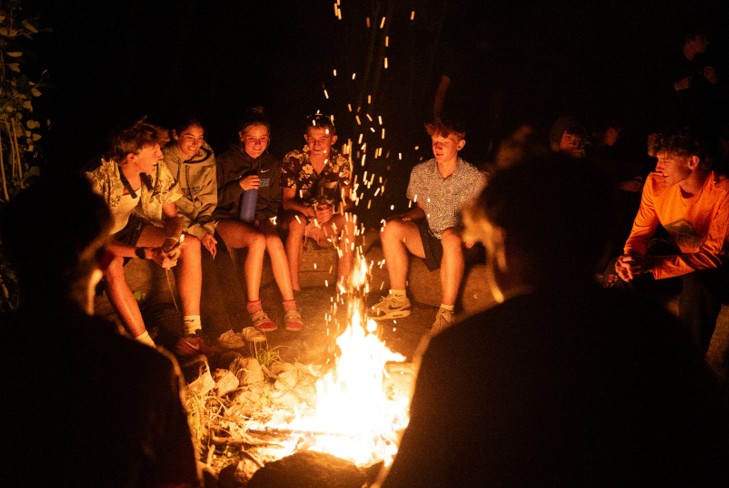
Many things set in place that first summer remain hallmarks of the camp experience: “Kids are in charge of KP, cleaning their tents, washing their dishes, outhouse cleanliness, and wash stations,” says Jenner. “There’s no electricity, no showers, no cell phones! They’re at campfires every night, laughing, talking.” Harland adds, “Campfire conversations require no Wi-Fi.”
The camp crew numbers around 50, including cooks, bus drivers, medical staff, guest coaches and their children, site managers and, of course, experienced and lauded runners and running coaches like Max King, Sam Lewis, Piet Voskes and Melody Fairchild, “one of the most decorated female runners in the United States,” says Jenner. Over the years the coaching staff has perfected a week’s worth of training, equal parts hard work and fun. You be the judge!
Sunday the students arrive and get settled in. “When they get up here, they don’t want to get dirty. They soon realize, the dirt on Steens is ‘clean’!” Harland is fond of observing. “Then they realize it’s inevitable and they start to wear it like a badge.”
Monday is spent acclimating to altitude (the base camp site is at 7,100). “We’ve had kids come from Spain, Dubai, England, inner cities like Chicago,” notes Jenner.
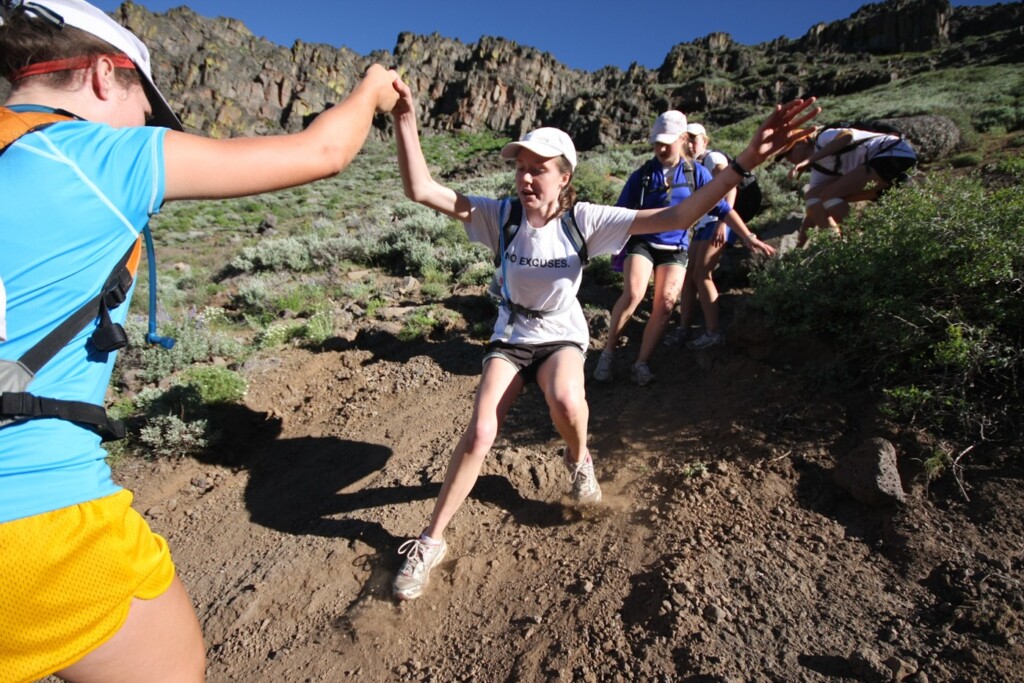
Tuesday is called “Big Day,” famous for a 21-mile rigorous hike and 7-mile run in challenging terrain. Jenner shows his coaching colors when he sums it up as “the most popular day for getting tough.”
Wednesday is spent in camp recovering from the Big Day. The camp reflects on the day before as a way to prepare them for their life ahead. “Steens is more of a life camp than a running camp.” Jenner says.
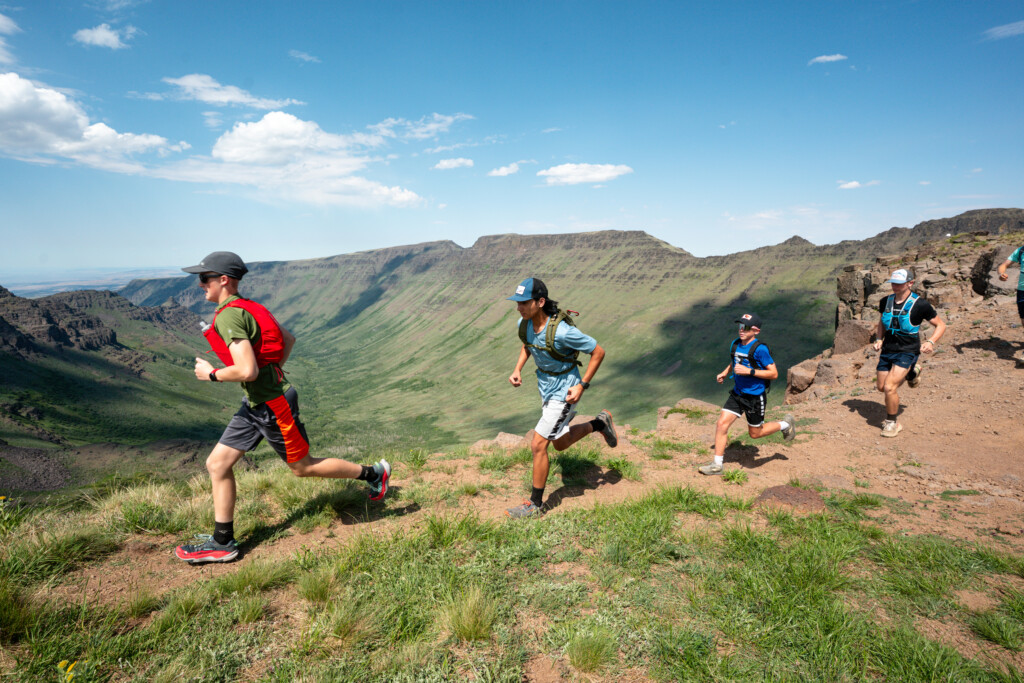
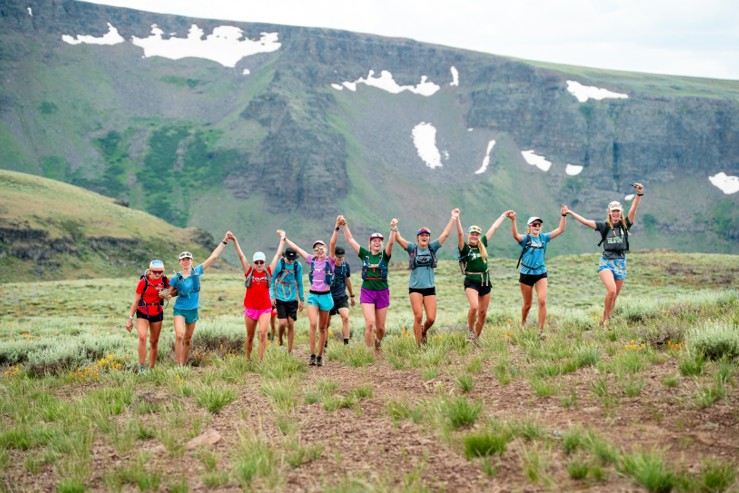
Thursday is Cross Canyon, a run that traverses above the Kiger Gorge and McCoy canyon area. Every competitor must run and finish the race with their team … holding hands. Additionally, at the start, in the middle of high-altitude nowhere, each runner has 60 seconds to memorize a quote. On “Go!” they navigate what they, as a team, deem to be the best route through three miles of rugged rocks and rills. Once back at Camp, a team member is randomly selected to recite the quote. Any inaccuracies result in time added to the team’s finish.
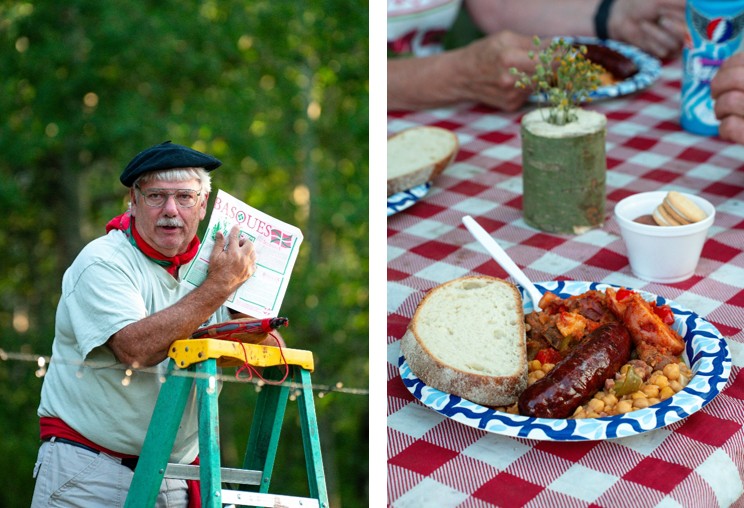
That night’s annual Basque banquet caps off this perfect day, perfect to a runner that is. “We open with the Chicken Dance and a Bota Bag demonstration,” Jenner explains. “Our Camp cooks and the Iturriaga and Runnels families of Burns prepare a dinner of lamb stew, garbanzo bean soup, chorizo sausages with French bread, and pears in cinnamon and wine for dessert. We end the night with dancing and campfires. It’s a great night for our Campers!”
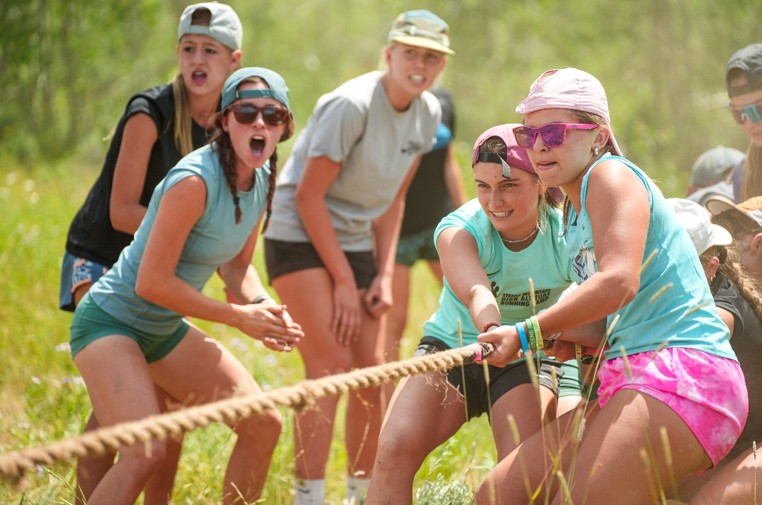
Friday everyone participates in Olympic Day, which includes, an uphill 5K, tug of war, bar hang, gunny sack races, and a water bottle relay. The day ends with camp skits, awards ceremonies, and a final speech tying in the Camps’ lessons to kids’ lives when they return home. “Our goal is to help these kids become the best versions of themselves. If they go home a better person, we’ve done our job.” Jenner concludes.
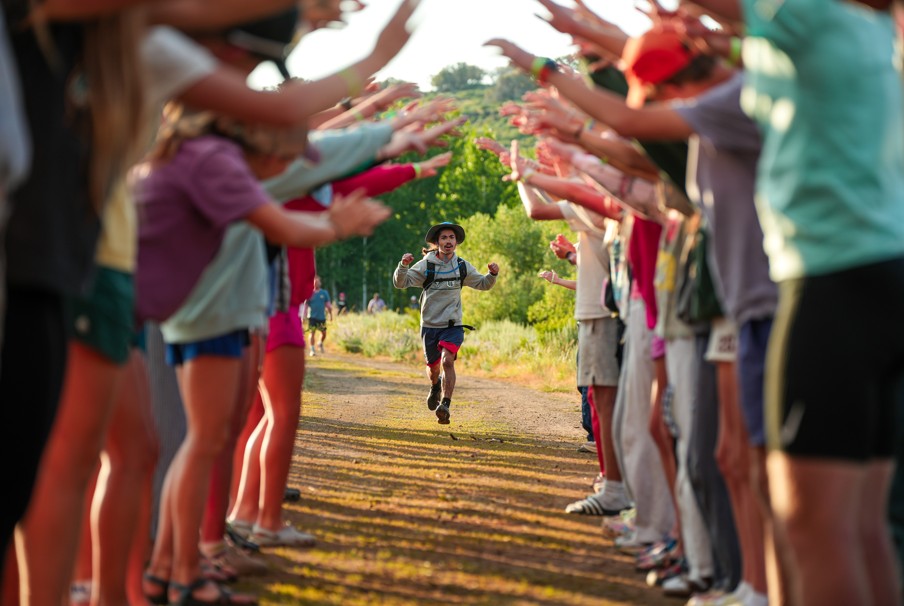
Saturday features lots of sad faces as campers are transported to Burns to head home … but not before a victory lap on the high school track.
“I tell campers I am only here because my forefathers and mothers came here to find opportunity,” Jenner says. “When I drive up Steens Mountain, knowing what my dad started here, knowing my grandparents were ranchers here—I never met people with so much savvy about land, livestock, with so much respect for land. They’d offer thanks and prayers when we butchered an animal or filled a tag or caught fish. All was blessed, so to speak. And knowing my great-grandpa used to run sheep on this mountain, I’m walking where he walked, it’s special.” He smiles and adds, “I like to visit the tree carvings.” (It was a common practice for herders to carve messages or artwork or just to pass time on quaking aspen trees). “One particular herder had a crush on my great-aunt and carved her semi naked body on several trees. Dad found it, took a picture of it and sent it out to family as a Christmas card.” After a laugh he adds, “my Grandpa Louie thought it was funny and she did too, they were always good sports and full of laughter.”
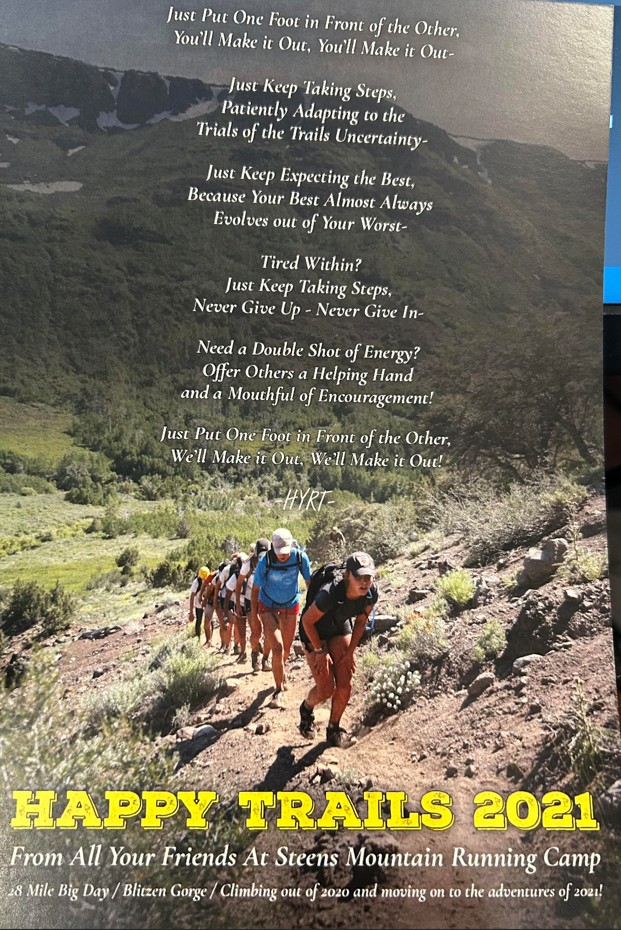
Speaking of holiday greetings, a recent New Year’s card that Harland sent out to campers and staff featured an image of Wildhorse Lake that sits just below the summit of Steens Mountain. The inscription read, “Your challenge, should you accept, is to absorb the character of Steens Mountain: ruggedly strong, delicately beautiful, ‘nature-ally kind,’ wonderfully wise … Make it who you are, then gift it to others down in flatland America.” And his coaching advice to Steens Mountain and, perhaps, to us all? “Be yourself! After all you became more ‘gorge’ous after the Ice Age!”
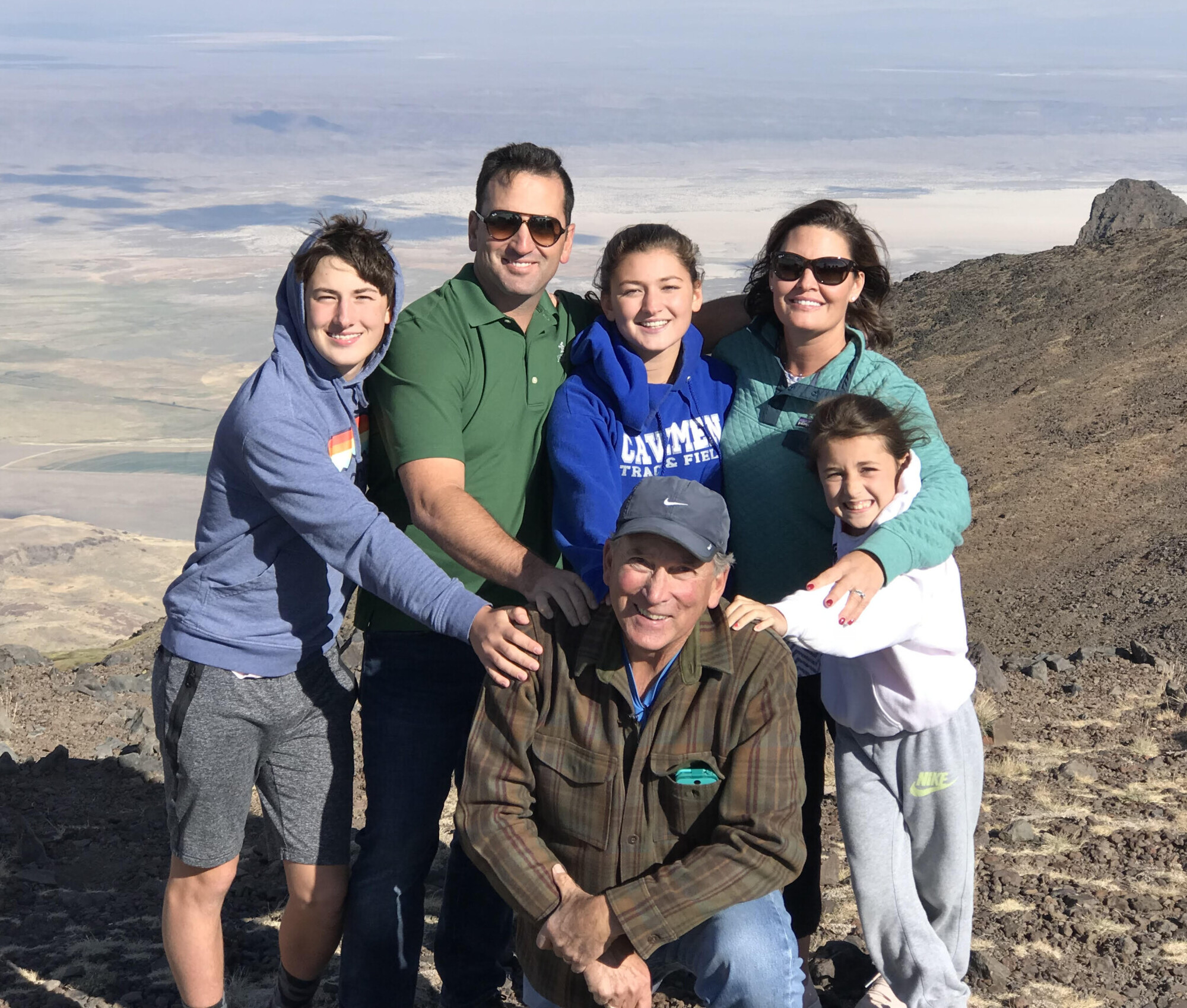
Feature photo: The Yriartes celebrate together on a sunny mountain day. From left, Asher, Jenner, Ella, Heather, and Sylvia hold on to Harland. Jenner and Heather met on Steens and their children have also been involved in the running camp Harland founded.
Photos provided by the Yriartes and Kevin Jantzer
Published November, 2025

More from the series