
A Conversation with SageCon Coordinator Rachael Davee & Oregon Department of Fish & Wildlife Biologist
Andrew Walch
Redmond, Oregon
by
Ellen Waterston
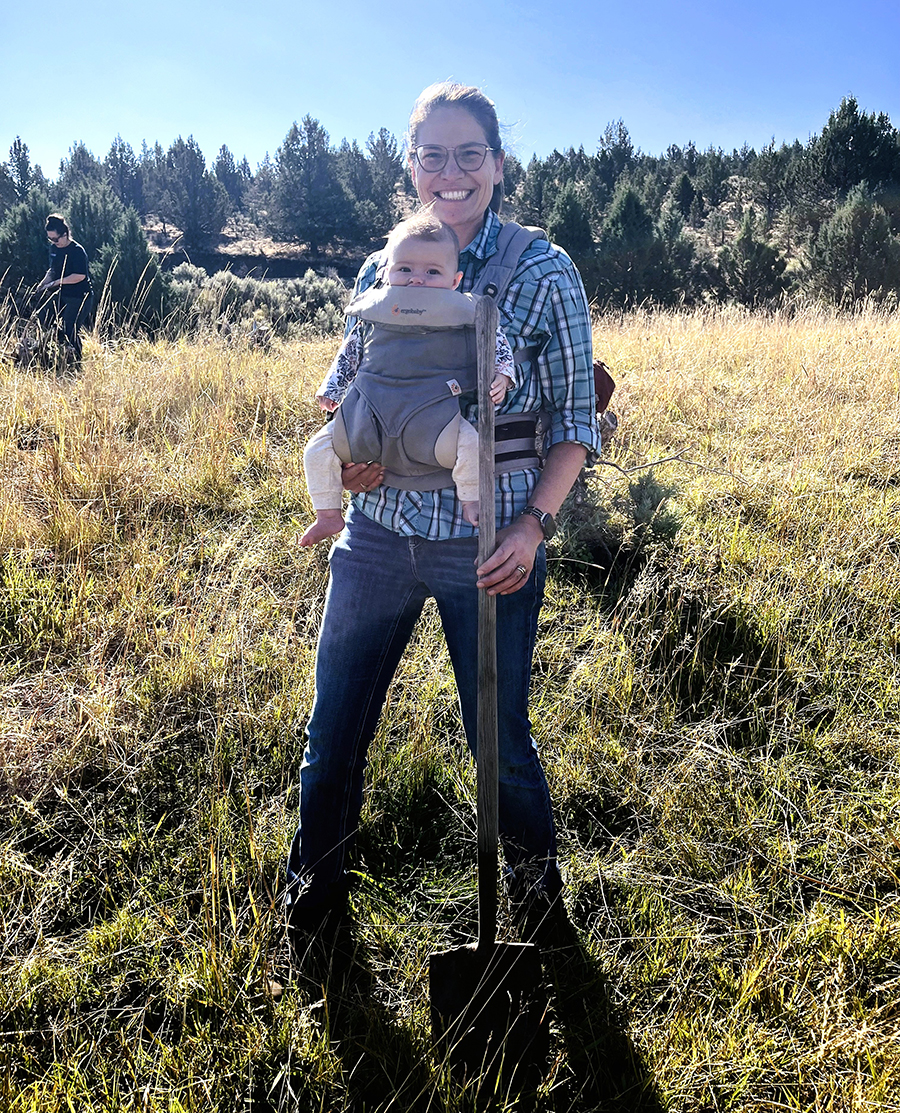
The lineup of footwear in the entryway says it all: hiking shoes, a pair of red cowboy boots, knee-high Wellingtons, trail runners next to miniature waders, tiny felt slip-ons, maybe a stray sock no bigger than your thumb. Entering the living room of this Redmond, Oregon, bungalow, colorful evidence of young children’s activities competes with stacks of what appears to be work-related reading. A generous window frames a view of a generous backyard, part of which has been successfully recruited for a large vegetable garden eagerly awaiting the return of spring. This is home base for Rachael Davee and Andrew Walch, the center ring for this young couple juggling their parallel passions for family and conservation work in Oregon’s high desert.
There was a time when the dry side of Oregon was the last place Rachael wanted to call home, but now she is one of the high desert’s strongest advocates. This Chicago native spent some of her childhood in Atlanta, Georgia and completed high school in Nashville, Tennessee. “I went into college thinking about practicing medicine,” she says. But while satisfying a biology requirement she heard about an ecology class that “sounded cool.” Little did she know how life-changing that course would be. It featured a field trip across Oregon’s public lands, a concept Rachael was not familiar with coming from the East Coast. “We started in Sisters,” she recalls, “and climbed up to the crest of the Cascades, all on public lands. We did the same thing along the Oregon coast.” During this expedition she met people working for the U.S. Forest Service and the U.S. Fish and Wildlife Service. She couldn’t believe their job was to take care of these wild and beautiful places. She had found her calling. “I chose Oregon when I had the chance to choose.”
But at that time what she meant by Oregon was the Willamette Valley, not the desert. She completed her undergraduate work at the University of Oregon and subsequently earned a master’s degree in geoscience from Oregon State University in Corvallis. Her focus, which would come into play later in her career, was how environmental policy spurs restoration actions—in this case related to beaver dam analogs. Her research took her out into the high desert to study sanctioned and unsanctioned restoration methods in the John Day area. Her first impressions of the dry side (“a wild, harsh place”) sent her scurrying back to the Valley where she felt more at home. She tucked back into her work close to the rivers, streams and temperate rainforests of western Oregon.
That is until her fiancé decided to take a job as a wildlife biologist in Oregon’s Outback. The two had courted while field partners on a salmon spawning survey in the streams of western Oregon and on the Oregon coast, Rachael’s preferred stomping grounds. But Andrew’s seasons of tracking big game for Oregon Department of Fish and Wildlife (ODFW) in eastern Oregon converted him to a lover of the high desert climes. Through friendly persuasion he persuaded Rachael to join him.
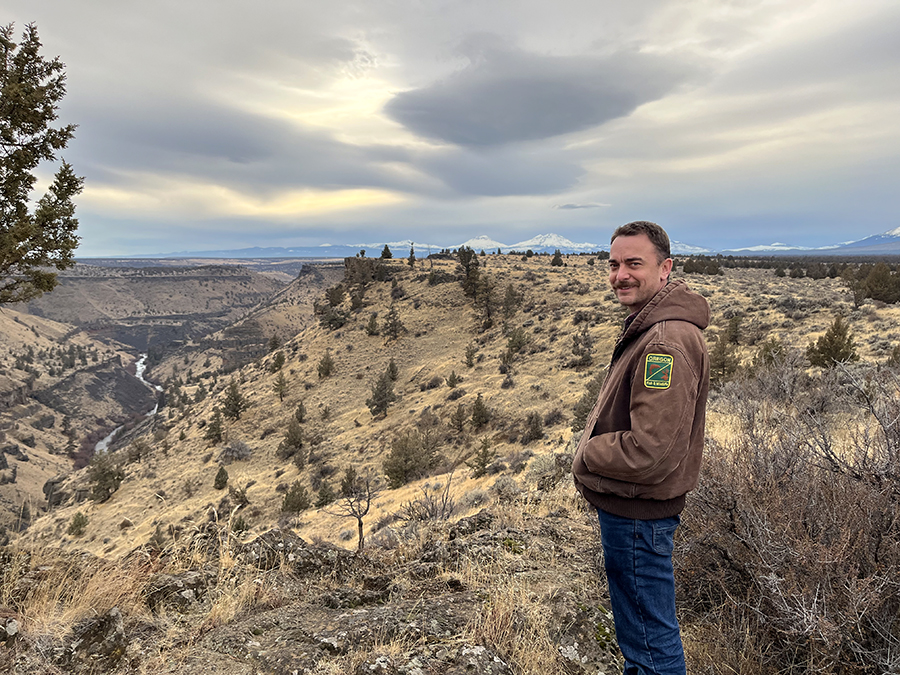
A fifth-generation Oregonian from Medford, Andrew’s relatives were longtime loggers, ranchers and hunters. Andrew planned on following suit. “I was a kid in the woods,” he says. But as the end of high school approached, Andrew got some firm advice from his father. “My dad was never going to let me go into the timber industry. When he got out of high school in the 70s, logging or mill work was a great profession. Not in the 2000s.” More education was the order of the day. But what subject area? Andrew remembered being intrigued by a wildlife biologist’s presentation at his school. Maybe that career would complement all he had come to love growing up.
For Rachael, her visits to see Andrew in central Oregon initially raised more questions than answers. “I didn’t know what all was out there. I felt intimidated by the people, the culture. I felt out of place. It was like stepping into someone else’s world. Could I get a job, build a career in the high desert? Would I be accepted? What did I have to offer?” But she remembers the time and place when her concerns first started to lift. She and Andrew were camping in Oregon’s Outback by the beautiful Chewaucan River outside of Paisley. Sitting on the bank one evening and reading “Walking the High Desert,” she realized “people from all walks of life love this place. It gave me a positive feeling.”
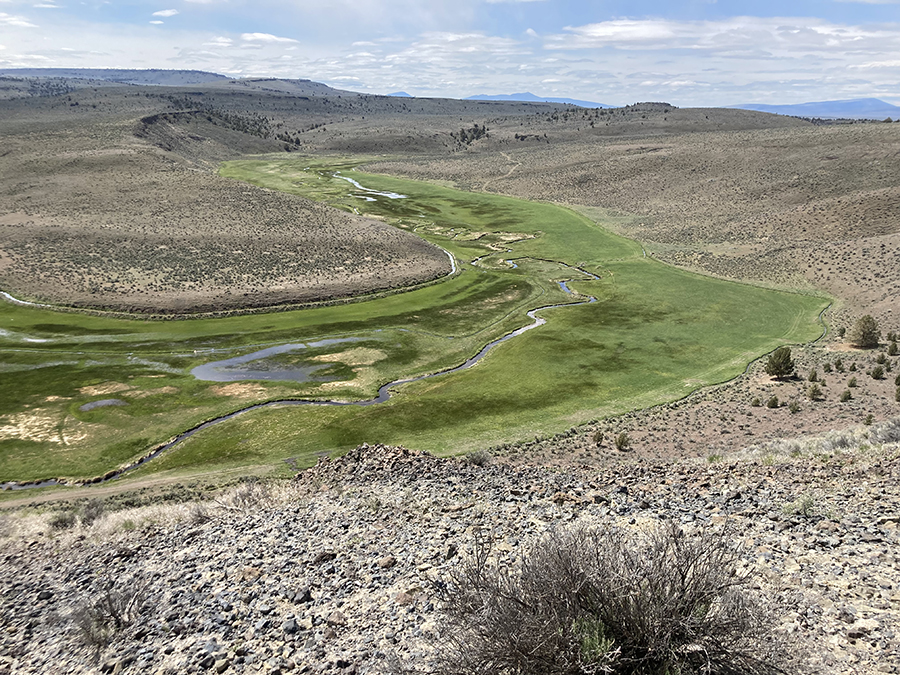
Emboldened, she undertook a sage grouse inventory project, helping ranchers along the Crooked River develop conservation plans and secure needed funding to implement them. She credits Andy Gallagher of the Crook County Soil and Water Conservation District for mentoring her throughout the task. His emphasis on collaboration, building friendships, and getting ranchers’ input every step of the way has remained key to her success ever since. “They see the world through the lens of their operation and business. I have a good understanding of ecology.” Over time they came to recognize Rachael as someone trustworthy with a lot of useful expertise. “I’d get calls from ranchers saying, ‘Hey, I did the thing you suggested and it worked out great! Any other suggestions?’”
Meanwhile, Andrew was benefitting from a diversity of ODFW field assignments in pursuit of his goal to become a district wildlife biologist. After gaining his footing on projects in the Willamette Valley, he migrated east to The Dalles for eight months to work on the Lower Deschutes River wildlife area. He offhandedly notes it was his first “landscape experience.” In wildlife biologist parlance that means being assigned to a remote location to collect data on wildlife populations and habitat health. In the case of the Lower Deschutes, a magnet for anglers, hunters, hikers and rafters, it also meant assessing the impacts of human recreational activities on ecosystems and wildlife, and making, if not implementing, management recommendations. “I was by myself, no cell connection and plenty of rattlesnakes,” very possibly this desert scout’s idea of heaven. That stint was followed by his first full time ODFW job—a full year at Oregon’s Summer Lake Wildlife Area where his task was to conduct weekly bird counts to identify new arrivals during migration season, and various habitat improvement projects around the wildlife area. And then, after six years as an assistant biologist and habitat biologist in Prineville and Bend, Andrew achieved his goal in 2021. He was named the district wildlife biologist serving central Oregon’s Deschutes District, one of 13 Oregon Fish and Wildlife districts east of Oregon’s Cascade Mountains.
“To do this job you have to know a little bit about a lot,” he explains. “We’re not specialists in any one topic. Although everyone has their strengths, we’re not research biologists.” His diverse field experience makes him a match for the three million acres under his care, from Warm Springs to Glass Buttes, Chemult to Christmas Valley. With the primary mission of conserving and improving wildlife and their habitats, a typical week might include monitoring red fox populations in the Cascades, conducting sage-grouse surveys, or flying in helicopters to track bands of mountain goats, or herds of pronghorn.
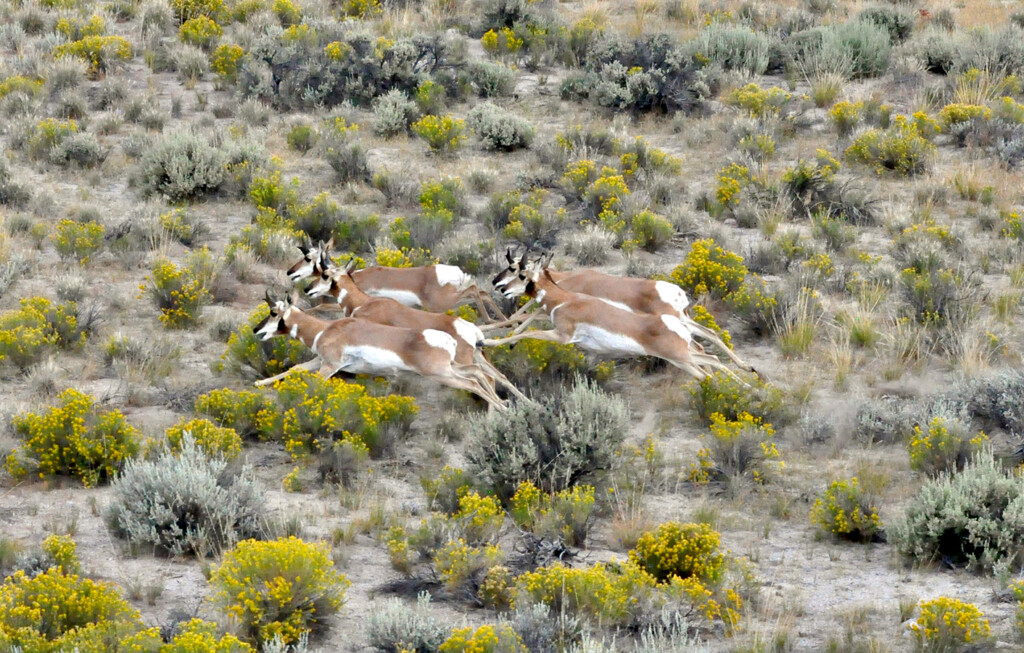
Now, as he enters his fifth year in the position, the impact of the growing population in the region is inescapable. “Change is now occurring at a pace in time so much faster than any wildlife species can adapt to.” He cites recreational pressure and habitat loss in the desert and forests due to fire and drought, declining sagebrush-dependent species such as the sage-grouse and pygmy rabbit. And then there’s the urban encroachment on surrounding lands. His job description has expanded to dealing with a troublesome bear in a La Pine chicken coop or confirming a cougar kill of a deer close to Bend residences that front the Deschutes River.
But when considering his vast and varied district, what concerns Andrew most is something humans can also take credit for—invasive annual grasses. “Fires and invasives marry,” he states flatly. From his tone it’s clear he sees it as a marriage made in hell. He singles out medusahead, cheatgrass, and, the new kid on the block, ventenata. “It looks like grass but nothing eats it because of its high silica content.” The grass’s shallow roots allow it to commandeer early spring water, robbing perennial natives. And because nothing eats it, the dried plants in the late summer and fall create a continuous load of fast-burning fuel, acting as what’s referred to as a “fire conveyor belt.” What’s also alarming to both these desert keepers is how the spread of these highly flammable invasive grasses in eastern and central Oregon has drastically changed the fire return interval. “We now have fires on eight-year cycles instead of 80 years,” notes Rachael. “Native food species can’t recover in time.” One positive is that ranchers and conservationists are united in their commitment to eliminating these desert invaders.
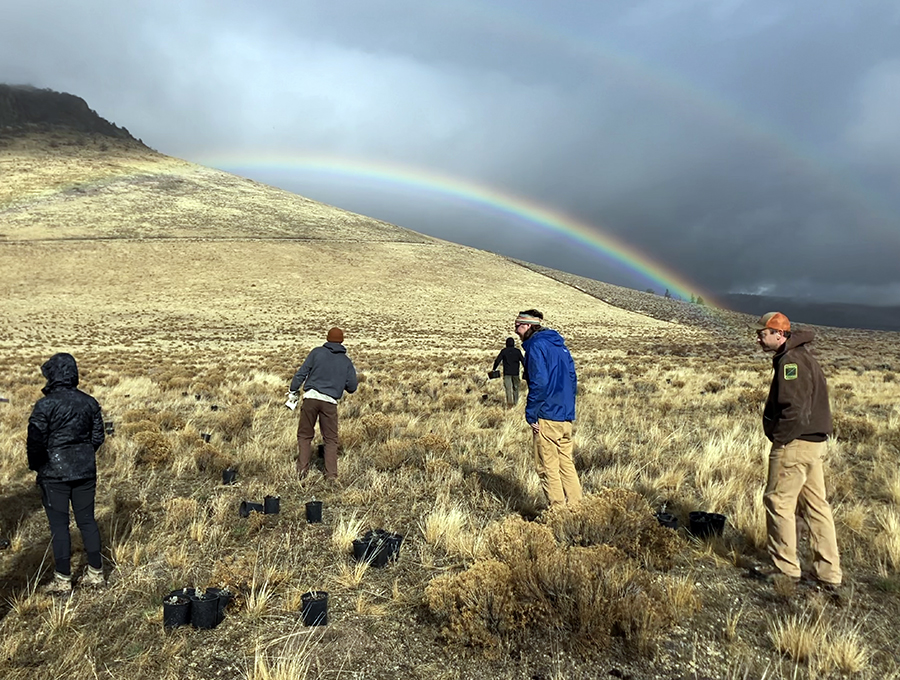
Another concern of Andrew’s is those who diminish the significance of the high desert, see it as a good-for-nothing wasteland. “We must combat the ‘middle of nowhere’ attitude. ‘Solar farm? Landfill? Put it out there.’” Central Oregon, he explains, sits on the northwest edge of the Great Basin, North America’s largest area of internal drainage. That boundary also marks the northern limit of all Great Basin species, an area that extends into Nevada and northern California. “The effects of climate change are most pronounced on the edge of the range,” says Andrew. Because Central Oregonians live on that edge they are in a position to sound the alarm before ecological degradation spreads across the inland sea. To do so accurately, and part of Andrew’s work, is to take a “before” snapshot of environmental conditions. “We have to have baselines in order to tell the story that is happening.” When it comes to the storytelling Andrew defers to his wife. “Rachael is the messenger. She is good at that.”
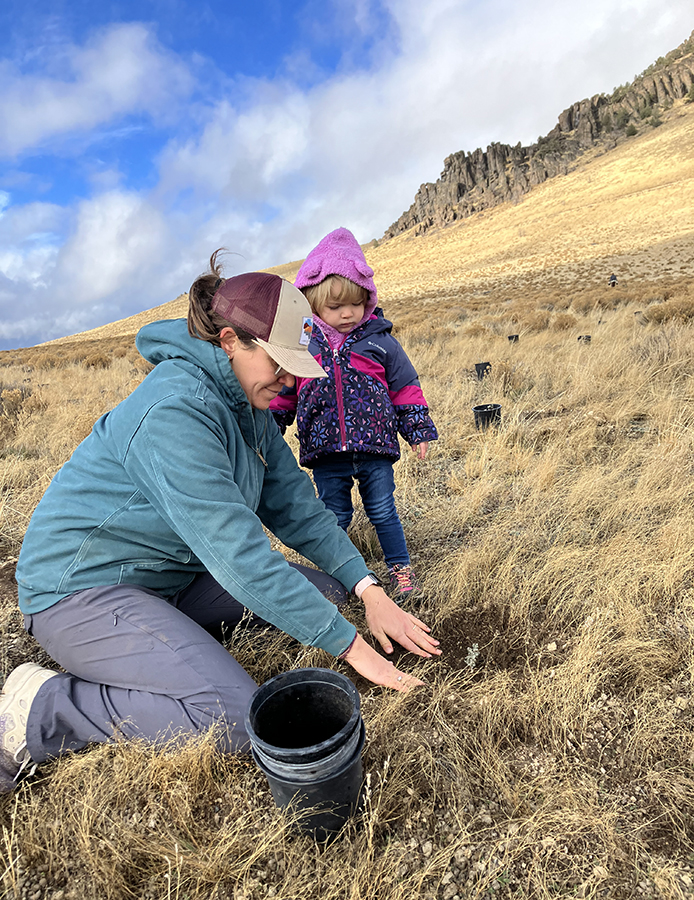
The Central Oregon-based SageCon Partnership is the perfect conduit for her specialty. It was formed in 2012 as a state task force to formulate an “all lands, all threats” approach to greater sage-grouse conservation. Playing on the phrase “practice random acts of kindness,” Rachael says the partnership “ties together random acts of conservation.” As the result of actively bringing like and unlike minds together to focus on ecological challenges to the sage steppe, “it is possible to have a conversation because we have a shared sense of stewardship for land and location,” states Rachael. “We” includes federal, state and regional entities, Tribes and private organizations. The chief activity of SageCon, under Rachael’s leadership as coordinator, is the implementation of the 2015 Sage-Grouse Action Plan—the greater sage-grouse serving as the partnership’s mascot and metaphor for the high stakes fight to conserve desert lands. “By using resources efficiently and blending independent projects and research, the combined knowledge becomes more useful, more accessible,” says Rachael. She underscores that, by its nature, everyone’s research is singularly focused. How best to communicate important but perhaps isolated findings? This finest of high desert mediators and consolidators pieces them together to create a high-quality project on the ground. Of course she gets discouraged during periods of severe drought, but she is the first to celebrate the desert’s joyful resurgence during times of abundant moisture, such as in 2023 and 2024. “Yes, we’re dealing with climate change crisis long term, but we can have wins in shorter cycles. That gives me hope.”
It’s that hope that fuels her purpose as SageCon coordinator. The result is implementation teams, volunteer conservation groups, an impressive menu of technical resources, and an annual SageCon summit meeting celebrating the wins while strategizing how to make Oregon’s sagebrush country and the Great Basin region generally more and more resilient. She sums it up: “SageCon consolidates information so it is useful to all, understandable to all. We help people working the land but also promote durable outcomes environmentally.” Unsolicited, she singles out the Oregon Desert Land Trust as producing the greatest dollar-for-dollar benefit to the land and all lifeforms within the growing conservancy. Andrew agrees. When he flies over southeastern Oregon, the lands that have benefitted from good stewardship are plain to see. “The only sustainable way for progress is cooperating and incorporating the working lands into it.” It’s a dream model he looks forward to making a reality for future generations, and that includes his two girls.
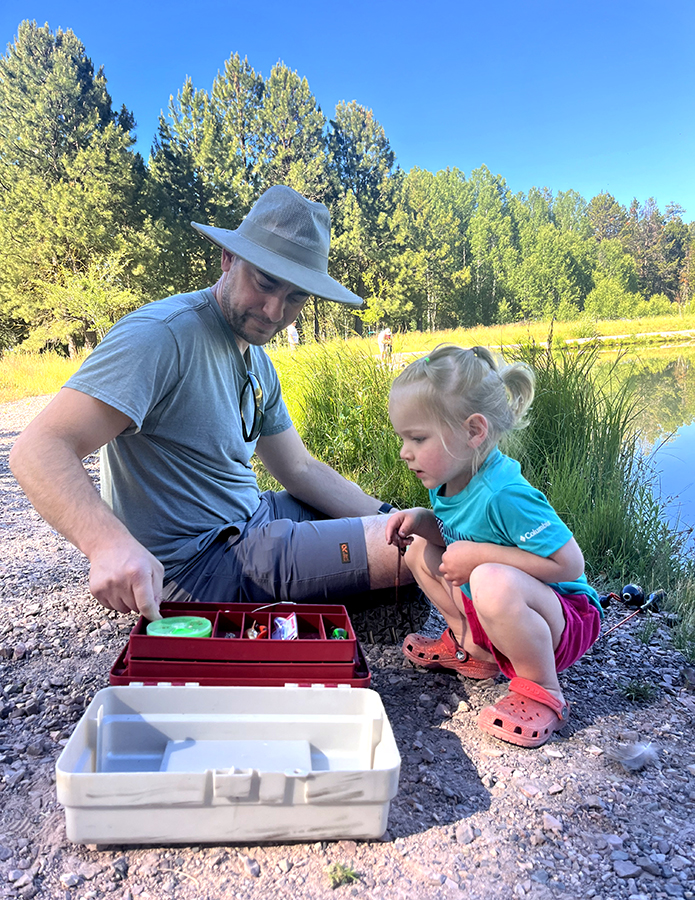
Their infant daughter hasn’t weighed in yet, but her four-year-old big sister has already decided that when she grows up, she wants to do what her father does for work. She also likes to clop around the house in her mother’s red cowboy boots, perhaps coming to terms with the big boots she will have to fill one day. “Any one of many scenarios could have taken us on a different path,” says Rachael. “I am so glad this is our land, that this is where we ended up.” The high desert agrees.
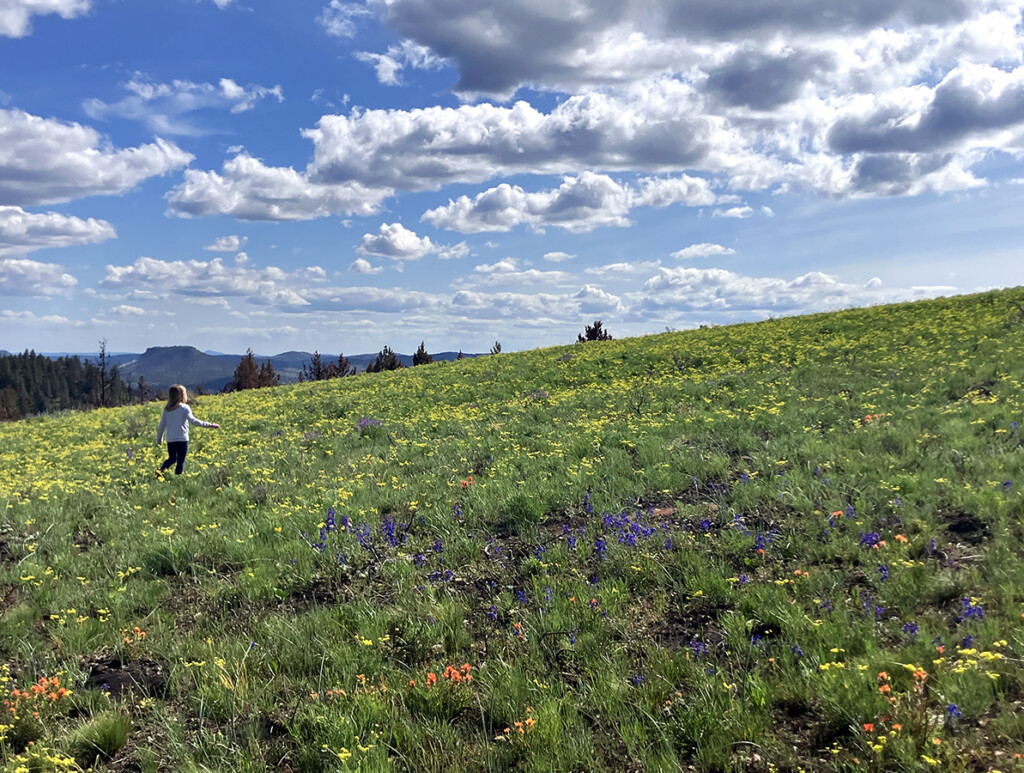
Photos provided by Rachael Davee and Andrew Walch.
Published February, 2026
More from the series